Showing posts with label used. Show all posts
Showing posts with label used. Show all posts
Monday, September 2, 2013
Used Car Review 1997 2001 Jeep Cherokee
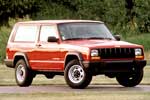 Here we go again. After that remark we made last year, the one about Jeep selling Cherokees until we are old and gray, it now appears that the Cherokees life span will continue for awhile longer. Due to "overwhelming customer demand," the Jeep people now tell us, "Cherokee production is extended past the original November 2000 close." Weve heard this before.
The Grand Cherokee was supposed to replace the Cherokee, but due to the demand for this solid, inexpensive SUV, they kept making them. Now, theyre coming out with another, smaller SUV that is supposed to replace the Cherokee. But people keep buying them.
So there is going to be a 2001 model, but after that, who knows? Jeep is eager to introduce newer, more modern, more aerodynamic products, such as the upcoming Liberty. You might want to wait and see what develops. Or you might want to buy a classic while you still can.
The four-cylinder Cherokee is already gone, which partially explains this years significantly higher base price. All 2001 Cherokees will be powered by a 4.0-liter, overhead-valve inline-6. This is the same engine that was re-designed last year for 50-state LEV (low-emissions vehicle) certification.
Highlights
Subtle styling revisions for the 1997 version of the Cherokee wagon did not disturb the popular models well-established character. Though substantial, the design alterations enhanced but did not alter the overall slab-sided look. Up front, the grille and front fascia were new, as was the bumper. Bodyside moldings were revised, and wheel arches now flowed into the front and rear bumpers. A new stamped-steel liftgate had hidden hinges, a new outside handle, and an inside pull strap. Inside, a revamped interior now included a passenger airbag, as well as one for the driver. Sound insulation was increased. A new central panel housed climate controls and the radio. New lighted power mirrors and power-window switches were installed. A new overhead console contained a storage compartment. Also new were a 5-function trip computer, and a center console with cupholders.

The Cherokee was available in base SE form with a 4-cylinder engine, as the midlevel Sport, or in top-of-the-line Country guise (the latter offered only as a 4 door model). Powertrains were unchanged. The 4-cylinder engine came only with manual shift. Standard in the Sport, the 4.0-liter inline six could have either the standard 5-speed manual gearbox or a 4-speed automatic transmission. Country wagon had the 4.0-liter engine and automatic only. Antilock braking was optional with the 6-cylinder engine. Cherokees came with rear-wheel drive or a choice of 4-wheel-drive systems. Command-Trac was a part-time system for use only on slippery surfaces. Available only with an automatic transmission, SelecTrac 4-wheel drive was a full-time system that could also be used on dry pavements.
Jeep Cherokee: Reliability
Editors have scoured repair bulletins and questioned mechanics to search for commonly occurring problems for a particular vehicle. In some cases we also give possible manufacturer-suggested solutions. In many instances these trouble spots are Technical Service Bulletins posted by the manufacturer, however, we have our own expert looking at additional vehicle problems.Air conditioner: The air conditioner gradually stops blowing cool air because the evaporator ices up. Replacing the low-pressure cycling switch usually fixes it. (1997-99)
Brake noise: Grinding and scraping noises under hard braking are caused by the driveshaft hitting the floor pan and is fixed by replacing the front lower control arm. (1997)
Brakes: The brake friction material transfers to the rotors (especially in warm, moist climates) causing brake-pedal pulsation when stopping. New pads should correct it. (1997-99)
Fuel gauge: The fuel gauge may show 1/8 to 1/4 full but the vehicle will run out of gas because of a defective sending unit that must be replaced. (1997)
Vehicle shake: Vibration at speeds over 60 mph may be due to a misaligned or defective driveshaft. (1997-98)
Windshield washer: Because of a bad check valve, windshield washer fluid drips from the nozzle for the rear window and can cause paint staining. (1997)
Driving Impressions
With its tight interior and stiff freeway ride, Cherokee might not be everyones choice for a long cruise. In fact, we suspect some people would dismiss the Cherokee as choppy on this score, and that would be true. This is not an Explorer, a sport-utility vehicle designed for people who see this breed as trendy station wagons. This is a Jeep, which means an implicit promise of off-road superiority.
Our Cherokee was equipped with the stiffer Up-Country suspension package and Selec-Trac four-wheel drive, making it even firmer than two-wheel drive versions.
Cherokee pogos a bit on uneven pavement -- certain stretches of I-80 in Pennsylvania, for example, the sections that inspire big-rig drivers to cruise in the left lane for slightly smoother going.
But on rutted dirt roads in the Pennsylvania outback, the Cherokee showed its true colors. Its combination of good ground clearance, short wheelbase and a favorable power-to-weight ratio make this boxy little veteran a tiger in the woods. The Selec-Trac four-wheel drive system, which can be used full-time, came in handy during a mini-blizzard that choked part of central Pennsylvania during this particular excursion.
Thanks to its relatively low curb weight, the Cherokee is something of an athlete among its peers. The Cherokee will smoke almost any other compact sport-utility on a slalom course, and its handier than most when its time to dodge traffic and potholes. Its on-center steering feel leaves much to be desired, however.
Cherokees optional four-speed automatic is a smooth operator, and theres enough torque in the venerable inline six-cylinder engine to generate excellent stoplight getaway, automatic or not. As always, wed prefer a manual transmission.
Power notwithstanding, the Cherokees inline-6 feels a little primitive compared to most of the V6 engines offered by Jeeps competitors. An inline-6 is supposed to be an ideal design for smooth operation, but Jeeps version generates noticeable vibration through most of its operating range.
summary
Jeep Cherokee continues to fall behind its competitors in terms of comfort and convenience. But if you value acceleration performance, the Cherokee still delivers. Its agile, and surprisingly quick.

Sunday, August 18, 2013
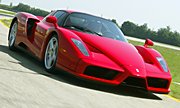
Used Car Review 2003 Enzo Ferrari
 Introduction
After more than a year of rumors, false names and spy photos, the Ferrari Enzo finally made its debut at the 2002 Paris Motor Show. Named in honor of the Italian auto maker’s founder, the Enzo is the latest special edition supercar to come out of Maranello. Past limited-run Ferraris have included the GTO, the F40 and most recently the F50 which celebrated the automaker’s 50th anniversary. While the initial plan was to build only 349 examples of the Enzo, Ferrari president Luca di Montezemolo announced that 50 additional Enzos would be built for a total of 399. Pricing has not been announced, but it doesn’t really matter – the entire run has already sold out.
Pros:
I like Enzo Ferrari, beacause not because of its speed & accelleration, because what it has done to racing. Since 1975, racers have been wishing to accomplish a good type & nessecery way.That is what I like about Enzo Ferrari.
Cons:
The design and styling of this car looks horrible compared to my F1. If you want the best of the best, wait until the Bugatti Veyron comes out...that car has a great chance of surpassing my McLaren F1.
Overall Review:
This car is known to be one of the greatest sport cars. It will go down in history with all of the other super cars. I have pulled many strings and worked very hard to even get a look at this car. My enzo (#274) off the assembly line is the greatest car I will ever own throughout my collection. I could tell you all of the stats and how it is so perfect in each an every way.
I could tell you that I get goos bumbs just looking at it when I take it out for a test drive on the track every two months or so, but it still wouldnt describe this car. I bought this car for me and it is the one car that will make me feel distingushed and imprtant unlike anyone else in the world. So my overall review is in the end its worth it, for me.
Over all I would recommend the Enzo to anyone with a healthy savings and a tolerance for adrenaline "jet lag". Its styling completely matches its proformance and keeps witht the flow in the way the car handles on straight aways and even corners. Dry or wet pavement, the Enzo goes toe to toe with the best I have driven and dosent miss a beat. I love the fact that no matter how let down I am about how the day has gone I can enjoy the "partnership" of an equally hard working machine. "kudos" - if you will- to Ferrari for living up to the pre-sale hype.
Wednesday, July 31, 2013
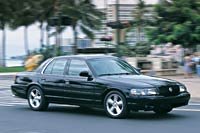
Used car Review 2003 Mercury Marauder
 The new Mercury Marauder takes its name from the big Mercury muscle cars of the 1960s, but its true spiritual ancestors are two black Mercury sedans that starred with Jack Lord in the long-running television series Hawaii Five-O.
Lord portrayed the granite-jawed Steve McGarrett, head of Hawaiis elite Five-O police unit, his demeanor cop-show tough, his hair a perfect North Shore wave, his car no standard police-issue Ford Custom 500 or LTD but a big black Mercury in which he stormed around Oahu.
"Steve McGarretts car is as much a character in the series as any of the people." So claims Karen Rhodes in Booking Hawaii Five-O, the best and as far as we know, the only scholarly tome on the cop show.
"The big, black Mercury sets a tone of power and intimidation," she continues. "Steve is . . . tough and threatening on his own, but the black Mercury adds a further dimension of strength, even a sinister darkness, to McGarrett." Thats some pretty impressive work for a 68 Park Lane and, later, a 74 Marquis, either of which, off-screen, might have been driven by your grandfather.
wenty-two years after McGarrett screeched his big black sedan to a stop for the last time, Mercury has served up a machine perfectly suited to the marques most telegenic enthusiast. The Marauder is a badass cop car with some major attitude.
The reborn Marauder first appeared not in Honolulu but in Las Vegas, as a concept car at the 1998 SEMA show. Considering what populates the miles of aisles at SEMA--wildly winged Honda Civics with hyperkinetic paint jobs, slammed SUVs on huge chrome wheels, bikini-clad babes stroking shock absorbers--Mercurys Grand Marquis in Darth Vader livery garnered a surprising amount of attention.
Walkaround
The Marauder, in its standard ebony paint, gives the same menacing vibes as a black leather jacket. The black monochrome treatment has even been given to the headlamps with only the reflectors spared the blackout treatment. The taillamp bezels are dark tinted as well for what Mercury calls a "serious, but understated appearance."
Up front, Cibie fog lamps are inserted in the front bumper, and the rear bumper has "MARAUDER" embossed in it while big dual 3.5-inch chrome exhaust tips protrude straight out the back.
A big car needs big tires, and the Marauder wears P235/50WR18 boots on front with wider, P245/55WR18 rubber at the rear. The larger rear tires give the Marauder a natural slight rake that enhances the performance image. Five-spoke forged aluminum wheels are eight inches wide and have cast into the wheel hubs the bas-relief image of Mercury, the swift messenger of the Roman gods and a Mercury revival from the Fifties.
The current Mercury logo is centered on the grille in a bright finish; we think the gods head logo should be here as well, but Mercury did not consult us on this. The exterior, according to Mercury representatives, was purposely kept simple because focus group attendees said theyd rather have it left plain to customize themselves.
Interior Features
Like Dorothy in Munchkinland realizing shes not in Kansas anymore, the driver of the Mercury Marauder knows hes not in a Grand Marquis.
The instrument panel has white faces, with a large round speedometer and tachometer flanked by smaller fuel and temperature gauges. The 140-mph speedometer incorporates a red-lit "Marauder" graphic.
Instead of a column shifter for the automatic transmission, a leather-wrapped shifter is mounted on a floor console that has two cup holders and a storage bin. An AutoMeter (a brand known to car enthusiasts) voltmeter and oil-pressure gauge are positioned just ahead of the shifter.
Marauders are also given dot-matrix gray trim accents on the instrument panel, while the dual eight-way power seats are finished in supple black leather, the best used in any Ford Motor Company product. Classic French stitching from earlier Marauders is revived for the 2003 edition. The seats were given extra padding for greater support, and of course theres a Mercury gods head de-bossed into the front seatbacks.
The optional six-disc CD changer for the 140-watt Alpine sound system is located in the trunk, where its not as convenient, especially if the trunk is loaded, though this is a quibble brought on only by the new in-dash CD changers. There is a single CD player, as well as a cassette player for those in the retro mood or those who enjoy books on tape. (Sorry, no 8-track player, though the radios AM band works well).
Filigrees aside, the interior delivers on the promise of the exterior with lots of room inside for five. Access to the cabin is easy through large doors, and finding a comfortable driving position is easy with the 8-way power seats, tilt wheel and adjustable pedals. The front buckets are wide (so much so that the seatbelt buckle end actually protrudes through the seat bottom cushion). The seats are soft, too. The back seat is wide and soft as well, with enough room across for three adult males, though the center rider loses foot room to the driveshaft tunnel of this rear-wheel-drive car.
The trunk is huge. If you need more luggage room than this, your name is Zsa Zsa and you should FedEx your steamer trunks of gowns ahead. The trunk organizer is nice to have, with adjustable section dividers, but not really necessary and offered on the Marauder, probably, mainly because its available on the Grand Marquis.
Driving Impressions
Fire up the engine of the Mercury Marauder and youll know this is no automotive Kansas. The V8 rumble from the dual exhaust announces that the Marauder is a true American performance car. The all-aluminum 4.6-liter engine was developed specifically for the Marauder, with four-valve-per-cylinder double-overhead camshaft heads. The compression ratio is 9.85:1, requiring premium fuel.
All this yields a power rating of 302 horsepower at 5750 rpm. Peak torque is 310 pounds-feet, and comes at a relatively high 4300 rpm. Mercury engineers specified a high stall speed torque converter for the automatic transmission, which means the engine can rev higher, reaching its power band before the automatic transmission transmits power, thus producing quicker acceleration. The engineers also biased the final drive selection, a 3.55:1 rear axle, for acceleration over fuel economy. The Marauder attained an EPA rating of 17 city/23 highway, impressive for a large car, so they obviously didnt go overboard. A limited-slip rear differential is used for better traction with beefy internals for durability.
The engine tuning works, as the Marauder accelerates with authority. Very few will be able to kick sand at the Marauder in the local stoplight grand prix. The base Grand Marquis, for example, is rated at 220 bhp, the Grand Marquis LSE at 235 bhp. The 1994 Impala SS produced 260 bhp, and was considered fast for its time. How our expectations change. Still, the Marauder weighs more than two tons, so the engine has its work cut out for it. Drivers who expect the Marauder to smoke its tires at every stop sign will be disappointed. Modern tires are much better than those of the Sixties, providing too much grip for this behavior. You can still spin the tires if you work at it. But otherwise, the power goes into acceleration, not tire spinning.
As good as the engine is, the new suspension is even better.
Mercury delayed introduction of the Marauder (originally a concept car displayed at the SEMA show in Las Vegas in late 1998) to use the new chassis of the 2003 Grand Marquis. This new frame shared by the Marauder, Grand Marquis, and Crown Victoria has new stronger hydroformed front rails, a new aluminum No. 2 crossmember and is generally more robust for improved stiffness. Chassis rigidity allows better engine and suspension mounting for better handling, and less noise, vibration and harshness transmitted into the body.
To this, Mercury stiffened up the Grand Marquis suspension, using special gas-charged monotube shock absorbers and, at the rear, air springs. A new "Gripper" anti-roll bar was used up front for quicker response and a better on-center feel to the steering.
How good does it work? We tried the Marauder in two venues. One was the south course at Pocono International Raceway, a combination of the NASCAR Turn 1 high banking and a twisting road course across the infield. The track allowed acceleration onto the banking and a top speed through the big curve of around 100 mph. In almost any other family sedan, if it could go that fast, the tires would be howling in protest. The Marauder was asking for more, balanced front to rear and holding on like a championship square dancer in a power swing-your-partner.
Through the infield, the Marauder handled like a sports car, a big sports car. It was easy to place it anywhere on the track, thanks to precise variable-ratio rack-and-pinion steering. The Marauder has what racers call "good turn-in," or transition from driving straight to turning. It also has remarkable transient response, the ability to change from turning left to right and back again. Part of the credit goes to the excellent BFGoodrich g-Force T/A tires, which combine great grip with ride comfort. The only thing marring our attempt at playing Rapid Roy That Stock Car Boy were the seats, which simply lacked the lateral support to counter the lateral force the Marauder can develop, and an imprecise shifter that hobbled attempts to shift the car manually in the infield.
We were impressed with the ability of the Marauder to brake straight and sure from more than 100 mph, both the 4-wheel disc brakes to slow the vehicle and the suspension and steering to keep it under control. Out on the road, the carefully cultivated exhaust note was just as evident on acceleration, though quiet when cruising. Choppy, patched-asphalt roads highlighted the firm suspension, but the frame and body feel solid and rattle-free. Theres no apparent flex to the frame, so the bumps encountered dont result in a shuddering reverberation thats worse than the bump itself. Ride on smooth pavement is quiet, with little road or wind noise.
Summary
The Mercury Marauder is a performance car and will appeal primarily to the automotive enthusiast. Mercury expects 90 percent of buyers to be male. Not a car nut? Dont buy the Marauder. The Grand Marquis or the Ford Crown Victoria will fill your big-car bill much better, and for much less money.
That brings us to another point. We flinch at $35,000 for this car. But the four-door BMW 540i, with a 290 bhp 4.4-liter V8, costs about $55,000. The Lincoln LS with the 252-bhp 3.9-liter V8 lists for about $38,000. Of course, those cars arent directly comparable to the Marauder, which is the only car of its kind on the market today. No doubt Mercury will sell a passel of Marauders to fans of big American muscle. Ford guys who wanted a car like the Impala SS but would never buy a Chevy finally have something to buy.
Sunday, July 28, 2013
Reviews SUV Used Car Reviews
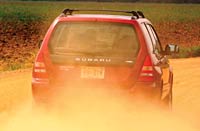
2003-2005 Subaru Forester
If it seems funny that Subaru had us test its 2003 Forester at Alabamas Talladega Superspeedway, trust me, it was. By the third time Id steered the second generation of this car-based SUV through the 2.66-mile ovals 33-degree high banks, I was grinning. By the end of my co-drivers turn at the wheel, I was laughing nonstop, so unlikely was the scene of this sensible Subaru all-wheel-driving at 85 mph over the same pocked tarmac where NASCAR stockers rub fenders at nearly 200.
I couldnt help thinking that we should have driven the new Forester on the steep ascents of San Francisco, the better to test the famous Hill-Holder clutch, which returns in the Forester after a five-year absence from the Subaru lineup. (The food would have been better in Frisco, too.) The Hill-Holder, standard with the five-speed manual, engages a pressure-holding valve when both clutch and brake pedals are depressed. Let up on the brake, and in that brief moment when your right foot is moving toward the accelerator pedal, when normally the car might roll backward toward Fishermans Wharf, the brakes stay locked until your hoof actually makes contact with the go pedal.
But we were not in San Francisco, and we do like Alabama barbecue, just as weve liked the Forester since it debuted five years ago as one of the first crossover vehicles. For 2003, changes to the wackiest Subaru are not revolutionary, but theyre noteworthy. The sheetmetal is new, with raised-eyebrow headlights and a hexagonal tailgate framing the more muscular bodywork. The stiffer chassis, derived from the new Impreza, boasts a front subframe made of hydroformed steel members.
Bigger anti-roll bars and front brakes have been fitted, and the interior has been freshened. Subarus 165-horsepower, 2.5-liter boxer four returns. You were expecting the Impreza WRXs turbo four? Dream on--the Forester is practical, not fantastical. Besides, that scenario would substantially raise the Foresters tariff, currently in the low to mid-$20,000s, and Subaru hopes to hold the line on Forester pricing, maybe even to drop it a bit on a comparably equipped basis.
The Forester has never beckoned to hot-footers, anyway, or to those people for whom all consumer goods, whether they be houses, fountain drinks, or SUVs, are better if theyre bigger. Its appeal lies in its standard all-wheel drive; modest yet functional overall size; just-right seating position--not too high, not too low, offering superb all-around visibility; useful 7.5 inches of ground clearance; and reasonable cargo capacity. If you haul around all your worldly goods, skip this one. But if you leave most of them at home, the Foresters 32.0 cubic feet of cargo space with the rear seats in place and 64.1 with them folded will serve you well. My co-driver and I hauled a seven-foot, 200-year-old grandfather clock from a rural antiques store to our Birmingham hotel (albeit with one of us riding beside it in the back seat).
The Foresters carryover strut-type four-wheel independent suspension does a decent job of damping most under-wheel intrusions, except in the truck lanes of Alabamas freeways, which can test the mettle of any cars underpinnings. Under those circumstances, we found it best to move into the left lane and give the Forester the boot. Said maneuver demonstrated that the optional four-speed automatic is hard-pressed to make the most of the engines modest torque. Go for the five-speed manual.
Side air bags, now protecting both head and chest rather than just chest, are newly standard, along with front-seatbelt pretensioners and active head restraints, and the uplevel XS model gets electronic brake-force distribution. Perhaps most interesting, though, is not what has been added but what has been taken away: weight. The Forester is about 90 pounds lighter than before, thanks to increased use of aluminum and a new welding technique for the body. Lighter is always better, whether youre flooring it at Talladega or cresting hills in Pacific Heights.
Friday, July 19, 2013
USED CAR REVIEW 1997 Ford Telstar TX5 V6
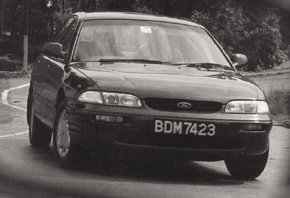 IN 1994 Ford of Japan shoehorned a 2.0-litre quad-cam V6 into the body of its Telstar, chucked some large tyres and rims on it, put sports seats and trim inside, and called it the TX5. This was made available in Malaysia only as a four-door manual hatchback.
If you are looking at the option of buying a used sedan for about RM$35K, then you have to test-drive this car. If you like to drive, you have to drive the Ford Telstar TX5. This is a sports sedan without an identity. First of all, there are two models: the sedan V6 and the five-door hatchback V6 manual. The TX5 with the V6 manual gearbox is what I’m talking about, and if you like to crunch gearboxes, then take a look at it.
First, take a long hard look at the Telstar TX5’s picture. The Ford Telstar TX5 has always been a good predictable sedan that outshone the competition but never made the top ten sales figures in Malaysia. The TX5 had to sell against locally made Perdanas, Honda Accords, Toyota Camrys and its sister the Mazda 626 in both the medium (the four-cylinder models) and upper-medium (V6) segments that almost ensured quality. Performance can be spirited and, for some drivers, the V6 auto will lack low- to mid-range torque and low prestige value.
When you’re out on the road, this car is wonderful. The suspension and firm body gives this car superb handling. BMW drivers take heed, as this car will give you a surprise. Road noise is acceptable and the boot eats up two large luggage bags with ease. Back seat drivers will not complain.
Acceleration from the 150hp V6 is much better than you would expect. With its handling abilities, you might want more horses under the hood, but the Telstar TX5’s engine is more than up to the task. Top end grunt is impressive with the needle going past the 200km/h point where possible. The car handles road bumps very well, and gives the passenger an excellent sense of stability when on the highway.
Back to the identity crisis: On the one hand, for most gear heads the Telstar TX5 looks like a family car. And the interior is obviously the result of too many cost cutting measures that Malaysians who can only afford locally produced cars have been forced to accept for years. These features will attract cost conscious family car buyers who appreciate an imported looking and feeling car.
The excellent acceleration and wonderful handling would appeal to drivers who like BMWs. If this car looked as good as the 5 series, this car would eat up buyers as well as it eats up miles. This car has nearly every option you could think of. Central locking, ABS, air conditioning, cruise control, rear wiper/washer/demister, power steering and more and non of this is public knowledge!
The manual Telstar TX5 hatch is very, very hard to locate. Bags of power and style and an unbelievable price to match! A 1995 manual 2.0-litre sedan will sell for as low as RM$33,000 and they run all the way up to RM$38,000 for a good 1997 V6.
Conclusion: this car is an excellent compromise between comfort and performance. It is an easy manual car to drive for those spoilt auto box lovers. It’s an excellent point-to-point performer and inspires a great deal of confidence with its roadholding ability.
Verdict! Smooth V6 engine. Classy, sleek almost fish-like bodywork. A better buy to any locally produced V6, even new ones! Performance is lively if not rapid, and reliability is up there with the best. Hard to beat used price for overall value.
Source of information: http://www.autospeed.com/
Thursday, July 18, 2013
The best used vehicles for under 20 000
$16,000-$20,000
Acura RL 99, TL 00-01
Buick Regal 03
Honda Accord 02, CR-V 02, Odyssey 00, Prelude 01
Infiniti G20 02, I30 00-01, QX4 00
Lexus ES300 00, GS300/GS400 98, LS400 97-98, RX300 99
Lincoln Town Car 00-01
Mazda Millenia 02, MPV 02, Miata 03
Nissan Altima 03, Maxima 02, Pathfinder 01
Toyota 4Runner 00, Avalon 00-01, Camry 02, Camry Solara 01-02, Celica 02, Land Cruiser 97, RAV4 02, Sienna 01-02, Tundra 01
$14,000-$16,000
Acura Integra 01, RL 98, TL 99
Honda Accord 01, Civic 03, CR-V 01, Prelude 00
Infiniti G20 01, QX4 99
Lexus ES300 99, GS300/GS400 96, LS400 96
Mazda Millenia 01, Miata 01-02
Nissan Maxima 01, Pathfinder 00
Subaru Forester 01, Impreza 02, Legacy/Outback 01
Toyota 4Runner 99, Camry Solara 00, Celica 01, Land Cruiser 96, RAV4 01, Sienna 00, Tundra 00
$10,000-$14,000
Acura Integra 99-00, RL 96-97, TL 97-98
Buick Regal 00-02
Chrysler PT Cruiser 02
Honda Accord 99-00, Civic 01-02, CR-V 99-00, Odyssey 97-98, Prelude 97-99
Infiniti G20 99-00, I30 99, QX4 97-98
Lexus ES300 96-98
Lincoln Town Car 98-99
Mazda 626 01-02, Millenia 99-00, MPV 00-01, Miata 99-00, Protegé 02-03
Nissan Altima 01, Maxima 99-00, Pathfinder 98-99
Subaru Forester 00, Impreza 00-01, Legacy/Outback 99-00
Toyota 4Runner 96-98, Avalon 99, Camry 99-01, Camry Solara 99, Celica 99-00, Corolla 03, RAV4 00, Sienna 98-99
Less than $10,000
Acura Integra 96-98, TL 96
Chevrolet/Geo Prizm 96-02
Ford Escort 97-02
Honda Accord 96-98, Civic 96-00, CR-V 97-98, Odyssey 96, Prelude 96
Infiniti G20 96, I30 96-98
Isuzu Oasis 96-98
Lincoln Town Car 96-97
Mazda 626 98-00, Millenia 96-98, Miata 96-97, Protegé 96-01
Mercury Tracer 97-99
Nissan Altima 96-00, Maxima 96-98, Pathfinder 96-97
Subaru Forester 98, Impreza 96-99, Legacy/Outback 96-98
Toyota Avalon 96-98, Camry 96-98, Celica 96-98, Corolla 96-02, Echo 00-02, RAV4 96-99
Prices are approximate, and can vary depending on the vehicles equipment, condition, and region.
Read more »
Acura RL 99, TL 00-01
Buick Regal 03
Honda Accord 02, CR-V 02, Odyssey 00, Prelude 01
Infiniti G20 02, I30 00-01, QX4 00
Lexus ES300 00, GS300/GS400 98, LS400 97-98, RX300 99
Lincoln Town Car 00-01
Mazda Millenia 02, MPV 02, Miata 03
Nissan Altima 03, Maxima 02, Pathfinder 01
Toyota 4Runner 00, Avalon 00-01, Camry 02, Camry Solara 01-02, Celica 02, Land Cruiser 97, RAV4 02, Sienna 01-02, Tundra 01
$14,000-$16,000
Acura Integra 01, RL 98, TL 99
Honda Accord 01, Civic 03, CR-V 01, Prelude 00
Infiniti G20 01, QX4 99
Lexus ES300 99, GS300/GS400 96, LS400 96
Mazda Millenia 01, Miata 01-02
Nissan Maxima 01, Pathfinder 00
Subaru Forester 01, Impreza 02, Legacy/Outback 01
Toyota 4Runner 99, Camry Solara 00, Celica 01, Land Cruiser 96, RAV4 01, Sienna 00, Tundra 00
$10,000-$14,000
Acura Integra 99-00, RL 96-97, TL 97-98
Buick Regal 00-02
Chrysler PT Cruiser 02
Honda Accord 99-00, Civic 01-02, CR-V 99-00, Odyssey 97-98, Prelude 97-99
Infiniti G20 99-00, I30 99, QX4 97-98
Lexus ES300 96-98
Lincoln Town Car 98-99
Mazda 626 01-02, Millenia 99-00, MPV 00-01, Miata 99-00, Protegé 02-03
Nissan Altima 01, Maxima 99-00, Pathfinder 98-99
Subaru Forester 00, Impreza 00-01, Legacy/Outback 99-00
Toyota 4Runner 96-98, Avalon 99, Camry 99-01, Camry Solara 99, Celica 99-00, Corolla 03, RAV4 00, Sienna 98-99
Less than $10,000
Acura Integra 96-98, TL 96
Chevrolet/Geo Prizm 96-02
Ford Escort 97-02
Honda Accord 96-98, Civic 96-00, CR-V 97-98, Odyssey 96, Prelude 96
Infiniti G20 96, I30 96-98
Isuzu Oasis 96-98
Lincoln Town Car 96-97
Mazda 626 98-00, Millenia 96-98, Miata 96-97, Protegé 96-01
Mercury Tracer 97-99
Nissan Altima 96-00, Maxima 96-98, Pathfinder 96-97
Subaru Forester 98, Impreza 96-99, Legacy/Outback 96-98
Toyota Avalon 96-98, Camry 96-98, Celica 96-98, Corolla 96-02, Echo 00-02, RAV4 96-99
Prices are approximate, and can vary depending on the vehicles equipment, condition, and region.
Subscribe to:
Posts (Atom)