Wednesday, September 11, 2013
New Car Review of the 2006 Suzuki Aerio
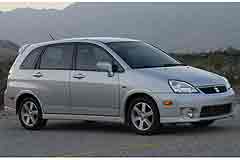 The 2006 Suzuki Aerio SX is a 4-door, 5-passenger wagon, available in 4 trims, ranging from the Base to the Premium AWD.
The Aerios styling is meant to look aerodynamic (thus the name) and distinctive. Its aimed at youthful customers and in the case of the wagon, offers plenty of space to haul their gear around. With an overall height 3 to 4 inches greater than most vehicles in its class, the Aerio boasts a surprising amount of passenger and cargo room at the cost of a chunky profile. Legroom meets or exceeds that of most competitors, and the same is true for cargo space.
Unlike most manufacturers that have a few different engines for their compact, Suzuki offers just one for its Aerio: a 2.3-liter inline four thats good for 155 horsepower. This engine offers more horsepower than most of the cars competition. On the basis of power alone, the Aerio offers impressive performance for a car in its price range. The Aerios suspension uses MacPherson struts all around, but the cars higher-than-average center of gravity results in considerable body roll. Consequently, the Aerio isnt particularly rewarding to drive, though the soft suspension does soak up the bumps without jostling the passengers, making the car a decent choice for commuters.
Driving at highway speeds isnt exactly quiet, but its not unbearable, either. The suspension transmits quite a bit of noise into the cabin and 18-wheelers sound a tad scary when you pass them, but its not bad for a commute. You just wouldnt want to spend 10 hours on the Interstate in this car.
Best of all, even the base models come with a good level of standard equipment, including automatic climate control and a CD player with MP3 capability. Other standard features include power windows, locks and mirrors, keyless entry, a rear spoiler, tilt wheel and outside temperature gauge. Thats a lot for the money.
For people who need good traction in the winter, the Aerio is the cheapest all-wheel-drive car on the market for about $2,000 more than a basic, front-wheel-drive version.
All in all, the Aerio offers a lot of car for the money, but it doesnt have the kind of refinement youd expect from, say, a Honda or Toyota -- or even a Nissan. Whether you buy one should depend on how picky you are and how much youre willing to pay for little things.
Things like decent shocks.
Interior Design and Special Features:
With an overall height 3 to 4 inches greater than most vehicles in its class, the Aerio boasts a surprising amount of passenger and cargo room, and passengers will find it easy to get in and out. Sedans offer a generous 14.6 cubic feet of trunk space; wagons provide 21 cubic feet with the rear seats in use and 63.7 cubic feet when theyre folded. Interior plastics are low in quality compared to the class leaders in the economy car segment. In the past, all Aerios had a hard-to-read digital instrument panel, but Suzuki replaced it with an analog gauge pack last year, while adding a couple of sorely needed storage areas.
Safety:
Side airbags and four-wheel antilock brakes are standard on all Aerios. In crash tests conducted by the NHTSA, the Aerio earned four stars (out of five) for its protection of the driver in frontal impacts, and three stars for front-passenger protection. NHTSA side-impact tests on an Aerio without side airbags returned a perfect five-star rating for the front seat, and four stars for the back. In frontal-offset crash testing conducted by the IIHS, the Aerio earned a "Good" rating, the highest possible. In IIHS side-impact testing, an Aerio with side airbags earned a "Poor" rating, the lowest.
Driving Impressions:
Solid power from the standard four-cylinder engine makes the Aerio impressively peppy for daily commutes; match it with either the automatic or the manual, and you cant lose. The Aerio provides a smooth ride on the highway, but the cost is excessive body roll around corners that is accentuated by the cars tall stance. Opting for the all-wheel-drive system gives the Aerio true all-weather capability.
Pros: Price and gas milage for an ALL WHEEL DRIVE great
Cons: needs more lights like the glove compartment and in rear entrance of hatchback
Alot of standard features for price. Like 6CD changer MP3 anti lock rear windsheild wiper with SX model premiem package. Good value for a cheaper AWD car.
great little car for the money, reliability is unknown. but with 7 years and 100000 miles coverage is a plus.

Wednesday, September 4, 2013
Skoda FABIA 1 4 16v 100bhp Ambiente Review
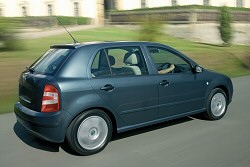 Advantages: VW buildquality and components, but better body design
Disadvantages: not exactly flash, the steering wheel is on the wrong side
Skodas Fabia 1.4-litre 16v 100bhp Ambiente Variant Is Situated In The Middle Of The Fabia Range And Might Be The Finest Fabia Of The Lot. Jonathan Crouch Checks It Out Its not an exaggeration to say that the Fabia supermini is the car that has turned Skodas fortunes around. From the moment it was launched the accolades came flooding in and the British public knew that they would need to take this Czech contender very seriously.
If youre thinking of buying a Fabia, this 100bhp 1.4-litre 16-valve Ambiente model is the best all-round package to go for. So, having got that established, what can you expect from the 1.4 16v 100bhp version? Well, rest to sixty in a fleet 11.
5s on the way to 115mph for a start and an average of around 37mpg at the pumps. Lower C02 figures (161g/km) can also be expected. Plus theres the choice of five-door hatchback or estate bodystyles (the estate version of this particular derivative costing £10,680). The Fabia has recently received its most far-reaching set of revisions since it was launched, the visual changes centring on a revised front grille, spoiler and fog lamps, as well as restyled rear light clusters that echo the "C" shape of the latest Octavias rear lights. The interior look is modernised with fresher interior upholstery.
"If I had to be in an accident in a supermini, Id want to be in a Fabia"
Other than that, its the familiar Fabia recipe. This is the longest car in its class and has the interior space efficiency to capitalise on those extra inches. Nor is any future rival likely to surpass it in this respect, for anything larger would stray into Golf, Astra and Focus family hatchback territory. Certainly buyers of such larger cars could consider this surprising little Skoda, for five can be seated in reasonable comfort, even if the rear centre occupant must make do with a lap belt rather than the three-point affair now offered by most rivals.
This and the rather Spartan feel are the only real criticisms you could make of an interior that is otherwise a class above most other offerings in this sector. Only that of Fiats Punto matches it for space - but that car doesnt feel as well screwed together as this one. Forget the plasticky feel of previous Skodas: the materials used are of the highest quality, plus there are lovely Audi-esque touches like a beautifully damped drawer beneath the radio. At Ambiente level, you also get lots of extra storage bins - something it would have been nice to see across the range. But this is a minor point.
The boots a useful shape (offering 1,016 litres with the seats down), with 60/40 access through the split-folding rear bench and sturdy luggage hooks for securing awkward loads. Front side airbags are optional and parents get two Isofix mounting points in the rear for the latest child seats. At the front, every Fabia gets rake and reach adjustment for the airbag-equipped steering wheel and the two plusher variants have drivers seat height adjustment. Which means that just about everyone should be able to get comfortable. The Fabias chunky styling means a boxy shape that offers good headroom, even for those in the rear. And that in turn contributes to a general feeling of spaciousness.
Electric front windows, electric heated mirrors, front fog lights, tinted glass and side airbags are all standard but you have to stretch to Elegance trim for heated front seats. The estate version, whilst not the largest estate car around, certainly offers significant extra utility over the standard Fabia hatchback. The first thing that catches the eye is that rounded rump. Surely this has a catastrophic effect on load space when compared with the more perpendicular lines of something like a Volvo? Actually, no.
Despite its soft angles, the Fabia estate can still manage a load space of 426 litres with the rear seats in place, which is more than apparently larger cars like the Alfa 156 Sportwagon or the Audi A4 Avant. Admittedly, this isnt saying much, as neither of these estates would claim to be the last word in tea-chest transportation, but with the rear seats folded an impressive 1,225 litres of room is freed up. Under the skin, the Fabia uses the VW Groups latest small car platform which is ultra-safety conscious: suffice to say that if I had to be in an accident in a supermini, Id want to be in a Fabia. As weve suggested, the 100bhp 16v 1.4-litre engine offers a good all-round package, and is surprisingly high-tech. There are no throttle cables: your right foot impulses are communicated via a drive-by-wire throttle. Five years ago, you found this technology on F1 cars: now you find it on Skodas. In summary, the Fabia may not be as cheap as small Skodas of the past but its still great value for money, especially in this 1.4 16v 100bhp Ambiente guise. Czech mate? You might well think so.
General Comments
After 23 years in the motor trade, and after owning several really nice top marques (BMW Mercedes Lexus to name a few!) I bought a Skoda Octavia, closely followed by a Skoda Fabia 1.4 Elegance estate.
I thought the Octavia was good, but the Fabia family car is a tad better despite being a little smaller.
General Feel is astonishing, as it is very light to drive, sweet and quiet with no creaks or rattles, and grips like a little limpet even in the wet.
The cabin is the class leader for space and quality furniture which is hardly surprising considering the mix of VW parts trimmed with slightly more exciting Czech upholstry!
All I can add is this. Drive a Fabia, and you will be seduced by its overall brilliance and quality. Ask every Skoda Fabia or Octavia owner the big question, and the answer is always the same. They love their Skodas, and I am no exception.
Mine is a 2002 1.4 16V Elegance (100bhp) and has covered 14000 fault free miles to date.
Tuesday, September 3, 2013
2006 Mazda MX 5 review
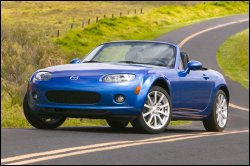 The 2006 Mazda MX-5 is a 2-door, 2-passenger convertible sports car, available in 6 trims, ranging from the Club Spec to the 3rd Generation Limited.
Upon introduction, the Club Spec is equipped with a standard 2.0-liter, I4, 170-horsepower engine that achieves 25-mpg in the city and 30-mpg on the highway. A 5-speed manual transmission with overdrive is standard. The 3rd Generation Limited is equipped with a standard 2.0-liter, I4, 170-horsepower engine that achieves 24-mpg in the city and 30-mpg on the highway. A 6-speed manual transmission with overdrive is standard.
The 2006 Mazda MX-5 is redesigned for 2006.
In the Drivers Seat
The new MX-5 interior has been improved nicely, with completely redesigned seats for better comfort and support, bottle holders in the doors, plenty of storage (even in this small a car), and some trick new features worthy of show and tell. First is the improvement in the roof operation. The top is now a Z-fold design, and has only one latch to lock in place. If you remember the old dual-latch design, we spent more time cursing it because it rarely latched correctly the first time. What a huge improvement. Plus, its a one-handed operation to raise and lower.

When you drop the roof, just push down on the top to lock it into place. No boot needed. Slick. The second cool feature is the Advance Key design that, unlike some of the bulkier keyless start systems, is the size and shape of a credit card, and easily fits in a pocket or purse. As long as the key is in proximity of the vehicle, just grab the ignition switch and turn on the MX-5. The shift knob remains compact and fits perfectly in the palm of your hand. This is one of those areas that Mazda designers attribute to their Kansei approach, where its about how the car feels in your hands... its a more emotional than strictly cold engineering level at which this car plays.
On the Road
What we love—and have always loved—about this car is its perfect balance. Another concept followed by the MX-5 Miatas creators is Jinba Ittai, which translates as: the rider and horse as one. Thats exactly how the new MX-5 feels. On the road it becomes an extension of the driver. You feel like a fighter pilot wearing a high-tech helmet that points the jet where you look. Its perfectly set up to take any corner without drama, no matter what the speed, and the shifts on the standard 5-speed manual are smooth, with direct, precise and short throws that never require more than a flick of your wrist to execute.
(Two other transmissions are available: a 6-speed manual and a 6-speed automatic with paddle shifters.)
The 2.0-liter engine now makes 170 hp and 140 lb-ft of torque, both up from the second-generation version. These numbers wont peel asphalt, but that was never the intention of the Mazda engineers. Its more about creating that perfect balance of the driver and the car. Frankly, for those of us who are true enthusiasts, this kind of driving is more enjoyable than screaming down the highway in a sedan with obscene performance specs that work great in a straight line but make your hair change color in the turns.
Sport vs Touring
Pros: great blend of comfort, milage and performence! ride not as brutal as sport. paddle shift a blast.
Cons: hard to keep under 90mph. why 4 cup holders???
If youre looking for a roadser that works as a every day car and tears up the twisting roads, this model is the one! the six speed auto/manual paddle shifter will make you forget all about a stick shift. Leave it in auto and let it do the work, (it down shifts too!) or choose manual and tear it up with the paddles, floor shift or combination of both simultainiously.
The great ride lets you explore the side roads all day without punishing your kidneys like the sport I test drove can. bottom line? if you want to stomp everyone at the autocross on the weekend, buy the club or sport model and park it during the week. If youre looking for simular performance in a great touring package you can drive all week, get a touring and get it all! Oh, did I mention the great break on insurance you get with an (automatic) sports car?
Monday, September 2, 2013
Used Car Review 1997 2001 Jeep Cherokee
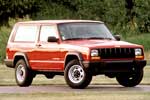 Here we go again. After that remark we made last year, the one about Jeep selling Cherokees until we are old and gray, it now appears that the Cherokees life span will continue for awhile longer. Due to "overwhelming customer demand," the Jeep people now tell us, "Cherokee production is extended past the original November 2000 close." Weve heard this before.
The Grand Cherokee was supposed to replace the Cherokee, but due to the demand for this solid, inexpensive SUV, they kept making them. Now, theyre coming out with another, smaller SUV that is supposed to replace the Cherokee. But people keep buying them.
So there is going to be a 2001 model, but after that, who knows? Jeep is eager to introduce newer, more modern, more aerodynamic products, such as the upcoming Liberty. You might want to wait and see what develops. Or you might want to buy a classic while you still can.
The four-cylinder Cherokee is already gone, which partially explains this years significantly higher base price. All 2001 Cherokees will be powered by a 4.0-liter, overhead-valve inline-6. This is the same engine that was re-designed last year for 50-state LEV (low-emissions vehicle) certification.
Highlights
Subtle styling revisions for the 1997 version of the Cherokee wagon did not disturb the popular models well-established character. Though substantial, the design alterations enhanced but did not alter the overall slab-sided look. Up front, the grille and front fascia were new, as was the bumper. Bodyside moldings were revised, and wheel arches now flowed into the front and rear bumpers. A new stamped-steel liftgate had hidden hinges, a new outside handle, and an inside pull strap. Inside, a revamped interior now included a passenger airbag, as well as one for the driver. Sound insulation was increased. A new central panel housed climate controls and the radio. New lighted power mirrors and power-window switches were installed. A new overhead console contained a storage compartment. Also new were a 5-function trip computer, and a center console with cupholders.

The Cherokee was available in base SE form with a 4-cylinder engine, as the midlevel Sport, or in top-of-the-line Country guise (the latter offered only as a 4 door model). Powertrains were unchanged. The 4-cylinder engine came only with manual shift. Standard in the Sport, the 4.0-liter inline six could have either the standard 5-speed manual gearbox or a 4-speed automatic transmission. Country wagon had the 4.0-liter engine and automatic only. Antilock braking was optional with the 6-cylinder engine. Cherokees came with rear-wheel drive or a choice of 4-wheel-drive systems. Command-Trac was a part-time system for use only on slippery surfaces. Available only with an automatic transmission, SelecTrac 4-wheel drive was a full-time system that could also be used on dry pavements.
Jeep Cherokee: Reliability
Editors have scoured repair bulletins and questioned mechanics to search for commonly occurring problems for a particular vehicle. In some cases we also give possible manufacturer-suggested solutions. In many instances these trouble spots are Technical Service Bulletins posted by the manufacturer, however, we have our own expert looking at additional vehicle problems.Air conditioner: The air conditioner gradually stops blowing cool air because the evaporator ices up. Replacing the low-pressure cycling switch usually fixes it. (1997-99)
Brake noise: Grinding and scraping noises under hard braking are caused by the driveshaft hitting the floor pan and is fixed by replacing the front lower control arm. (1997)
Brakes: The brake friction material transfers to the rotors (especially in warm, moist climates) causing brake-pedal pulsation when stopping. New pads should correct it. (1997-99)
Fuel gauge: The fuel gauge may show 1/8 to 1/4 full but the vehicle will run out of gas because of a defective sending unit that must be replaced. (1997)
Vehicle shake: Vibration at speeds over 60 mph may be due to a misaligned or defective driveshaft. (1997-98)
Windshield washer: Because of a bad check valve, windshield washer fluid drips from the nozzle for the rear window and can cause paint staining. (1997)
Driving Impressions
With its tight interior and stiff freeway ride, Cherokee might not be everyones choice for a long cruise. In fact, we suspect some people would dismiss the Cherokee as choppy on this score, and that would be true. This is not an Explorer, a sport-utility vehicle designed for people who see this breed as trendy station wagons. This is a Jeep, which means an implicit promise of off-road superiority.
Our Cherokee was equipped with the stiffer Up-Country suspension package and Selec-Trac four-wheel drive, making it even firmer than two-wheel drive versions.
Cherokee pogos a bit on uneven pavement -- certain stretches of I-80 in Pennsylvania, for example, the sections that inspire big-rig drivers to cruise in the left lane for slightly smoother going.
But on rutted dirt roads in the Pennsylvania outback, the Cherokee showed its true colors. Its combination of good ground clearance, short wheelbase and a favorable power-to-weight ratio make this boxy little veteran a tiger in the woods. The Selec-Trac four-wheel drive system, which can be used full-time, came in handy during a mini-blizzard that choked part of central Pennsylvania during this particular excursion.
Thanks to its relatively low curb weight, the Cherokee is something of an athlete among its peers. The Cherokee will smoke almost any other compact sport-utility on a slalom course, and its handier than most when its time to dodge traffic and potholes. Its on-center steering feel leaves much to be desired, however.
Cherokees optional four-speed automatic is a smooth operator, and theres enough torque in the venerable inline six-cylinder engine to generate excellent stoplight getaway, automatic or not. As always, wed prefer a manual transmission.
Power notwithstanding, the Cherokees inline-6 feels a little primitive compared to most of the V6 engines offered by Jeeps competitors. An inline-6 is supposed to be an ideal design for smooth operation, but Jeeps version generates noticeable vibration through most of its operating range.
summary
Jeep Cherokee continues to fall behind its competitors in terms of comfort and convenience. But if you value acceleration performance, the Cherokee still delivers. Its agile, and surprisingly quick.
Saturday, August 31, 2013
2007 Ford Focus RS review
 Ford Focus RS
When Ford launched its 220bhp Focus ST at the Geneva show, company officials were keeping schtum about an even hotter RS version in the pipeline. But now weve caught the flagship model undergoing cold-weather testing.
Whilst the ST, which arrives in late 2005, gets 220bhp from Volvos turbocharged five-cylinder 2.5-litre engine and is more powerful than the previous-generation Focus RS (200 bhp), the RS will be quicker still, with the T5 unit tuned for a good 250 bhp-plus and fitted in combination with the Volvo AWD system.
Ford plans hottest hatch of all
Ford is rumoured to be considering a 350bhp, four-wheel-drive, six-cylinder turbocharged proposal for the next-generation Focus RS. Right now the Blue Oval’s executives at the company’s headquarters in Cologne, Germany are considering a plan to fit Ford’s new flagship hot hatch, due out in 2007, with a new turbocharged in-line six-cylinder engine.
The advanced powerplant (right) has been developed by Volvo as a replacement for the Swedish car maker’s current six-cylinder engine, and is planned to make its debut in the new S80 due out next June.
Conceived for both transverse and longitudinal applications, the four-valve-per-cylinder unit is based around a die-cast aluminium cylinder block for an all-up weight of 180kg. It is also claimed to be 1mm shorter than Volvo’s five-cylinder engine – a feature that makes it suitable for a whole range of different models, including the new Focus RS.
Three different versions of the engine are planned: a base naturally aspirated 3.2-litre and a pair of performance-oriented turbocharged 3.0-litre units. The former receives variable cam timing (VCT) on the inlet valves, with the latter two adopting a system operating both the inlet and exhaust valves as well as a variable-vane Garrett turbocharger.
In 3.2-litre guise, the new six-cylinder produces 235bhp at 6000rpm along with 236lb ft of torque at 3500rpm – an increase of 38bhp and 26lb ft over Volvo’s current 2.9-litre engine. The turbocharged units deliver 285bhp and 295lb ft in light-pressure guise, with the high-pressure unit pumping out a BMW M3-beating 350bhp and 332lb ft.
It’s this latter specification that Ford’s Motorsport boss, Jost Capito, may use to thrust the Blue Oval back to the very top of the European hot-hatch ranks. If Ford’s plans come to fruition, the new RS will boast a whopping 133bhp and 96lb ft more than the upcoming Focus ST, whose turbocharged 2.5-litre five-cylinder engine generates 217bhp along with 236lb ft of torque.
Unlike the front-wheel-drive ST, the new RS is being developed around new four-wheel-drive underpinnings. This promises to endow it with spectacular levels of grip and traction. One problem, however, is the lack of a suitable six-speed manual transmission for the new car. The gearbox in the Mondeo ST TDCi is rated to 295lb ft, although insiders say measures are being taken to upgrade it for use in performance-oriented Volvos.
Here we go again: AutoExpress claims the new Focus RS has been canned..AGAIN!
Motoring NewsFord Focus RS
According to our sources, the firm will not use the famous RS badge on the current or imminent facelifted MkII machine - due late in 2008 - because of concerns over CO2 emissions.
One potential RS customer, who had placed a deposit for the car at his local dealership, said: "Id handed over the cash 18 months ago, not wanting to miss out. But I was told staff had to return it, as the project has been abandoned on environmental grounds."
A Ford spokesperson revealed: "Our commitment to performance cars meant that we did build a number of Focus engineering mules to test and develop high-performance parts for future products. Sadly, we never got to the point where we were ready to begin developing a business case for an RS-badged Focus."
Auto Express last scooped these cars in Issue 933. Its believed that prototypes offered around 300bhp and four-wheel drive. But the spokesperson was keen to dismiss the claim that the decision was eco-based.
"Its worth bearing in mind that its not the green issue which is driving this decision - cars have to be profitable. While Britain is the home of RS, theres not enough interest across other markets for us to earn the kind of money thats going to give the vehicle a green light," said the spokesperson.
However, there is still hope for fast Ford fans. Potential RS versions of the MkIII Focus, due in 2010, are possible.
Thursday, August 29, 2013
2006 Mitsubishi Lancer Evolution review

If your looking at the Evo you obviously know what this car is about. Throw you back in your seat acceleration, insane cornering grip, and brakes that would have stoped the titanic. All this for a little over $30,000 and you have a car that will compete with cars costing hundreds of thousands more.
If your buying this car your looking for the thrill of driving. Not a spectacular interior but build quality is outstanding. The list of standard features is respectable with everything you would expect from a car in this price range.
The ride is a bit choppy on my small town Wisconsin roads but it does nothing to take away from the pleasure of driving this awsome machine. Be warned though. Everyone wants a ride in it and everyone wants to see what its got. This can get you in trouble. Believe me. In my opinion you cant find a better new car for the price. Excellent!
THE 2006 Mitsubishi Lancer Evolution MR is the fastest ugly car in the world. I mean that in the nicest possible way.
After all, making ugly fast is no small feat. Fast cars are typically low-slung, wide and rakish, aerodynamically optimized in the wind tunnel for high speeds and stability. Our innate sense of aesthetics responds to this kind of sleek-ifying in the same way we recognize a cheetah, a porpoise or a peregrine falcon as beautiful.
The stubby and thick Evo MR, on the other hand, is more like a rocket-powered groundhog, or a baby hippo fired out of a cannon. Fast. Ugly.
As appropriate for the name, it has taken many years of selective genetics to bring the Evo MR to its current fast/ugly nexus. The Evo line began in 1992 when Mitsubishi started building amped-up versions of its geeky Lancer sedan to compete in World Rally Championship racing.
In the next decade, while Evos tore up the WRC circuit, the ever-more-powerful street versions became the golden idols of performance pagans everywhere - everywhere, that is, except the U.S., where emissions standards made importation too expensive. This left thousands of young American men grieving in their parents basements, as the car was a star in video games such as "Gran Turismo" and "Need for Speed."
Inside and Out
Heres where it does hurt: no radio. No speakers. No power windows, no power door locks, no power mirrors, no keyless entry, no center console, no map lights. No sound deadening in the body, no carpeting in the trunk, no wiper in the rear, no paint on the naked door handles or mirrors. Amazing what we take for granted until its gone. Cant live without these life sustaining necessities? Then stay away from this track-ready Evolution RS - something that all but about 200 of Mitsubishis customers did last year. Honda sells that many Accords in two hours. On a slow day.
Since those voids can be easily filled with a step up the Evo ladder, lets focus on whats common to all Evos, most of which is common to all Lancers. Its just your basic retro-90s Japanese economy car interior: plain but perfectly functional. The few controls work exactly as expected, with a quality feel that belies their cheap appearance and new cupholders for this year. If it pleases your eye, you should have nothing to complain about. Especially if you like black.
Unique to Evos are the enveloping Recaro seats, which add side bolsters that aggressively hold you in place while maintaining the high comfort levels of the standard Lancer. There should be enough room and adjustability in them for drivers of all heights, though fatties might not fit within the narrow width. Also, those Recaro guys copied one of Volkswagens wrong answers by placing the angle adjuster on one of those frustrating knobs that must be turned ten thousand times to recline the seat one degree. And in some conspiracy against ergonomics, the knob has a freakin annoying triangular shape and is nearly impossible to reach with all that bolstering in the way. In a two-driver household, this car could inspire divorce.
Some more Evo exclusives are the Momo steering wheel (nothing wrong with this piece) and the sportier red gauges, in which the tachometer stands front and center. And of course, no other Lancer has the switch to toggle between Tarmac, Gravel, and Snow settings on the Active Center Differential.
The back seat is standard Lancer fare - adequate for two adults, possibly tolerable for three. Good legroom and footroom, but seat cushion too low, short, and soggy. The built-in head restraints are pretty flimsy, too, and there are no side air bags in any position. A mix of average-feeling leather and nice-feeling Alcantara (suede?) covers all surfaces.
The back seat doesnt fold down into the trunk like on other Lancers, no doubt to keep the car as stiff as possible. But the trunk is fairly roomy, even if, on this RS model, it looks like a looter made off in the night with the contents.
On the outside, the Evo MR looks like it went into a performance parts store and got dressed in the dark. New for this model is the inch-deep chin spoiler under the front air dam and the oval ports letting air flow around the intercoolers inlet and outlet pipes. In addition to the aluminum fender panels bulging like a can of bad Spam, the car sports a carbon-fiber rear spoiler complete with a small vertical "wickerbill" on the trailing edge. Most curious, though, is the "Vortex Generator," a row of small fins on the roof that create turbulence in the airstream over the spoiler, for an extra soupçon of downforce. Some guys have a comb-over. This car has an over-comb.
performance
The driver inputs are all perfection. The six-speed gearbox (with Teflon-coated cable linkage) is slick and affirmative. The close-set pedal position makes heel-and-toe driving effortless - and theres nothing quite like downshifting and blipping the throttle in the Evo. Frank Sinatra should have such ring-a-ding-ding. And, it will surprise no one, the steering is phenomenal. This car has one of the quickest steering ratios this side of Laguna Seca providing powerful sweeps of angular momentum with slightest inputs off center. And yet, on the freeway, the car tracks like an arrow.
This race-like responsiveness does have its downside. The rack ratio combined with the front wheels AWD linkage gives this car a truly ridiculous turning radius. Escalades are easier to park.
Of all the Evos phenomenal statistics, Im pole axed by this one in particular: Mitsubishi warranties the powertrain of this shrieking-sucking torque pig for 10 years or 100,000 miles. Holy groundhog. The car may be ugly, but that warranty is a beautiful thing.
2006 Mitsubishi Lancer Evolution MR
Base price: $36,299
Price, as tested: $36,894
Powertrain: Turbocharged and intercooled iron-block inline four, 16-valve DOHC, with variable-valve timing and dual-stage exhaust; six-speed manual transmission; full-time all-wheel-drive with active center differential; front and rear limited-slip differentials
Horsepower: 286 at 6,500 rpm
Torque: 289 pound-feet at 3,500 rpm
Curb weight: 3,285 pounds
0-60 mph: 4.5 seconds (est.)
Wheelbase: 103.3 inches
Overall length: 178.5 inches
EPA fuel economy: 18 mpg city, 24 mpg highway
Final thoughts: Revenge of the nerd
Need 4 Speed?Get u some EVO
Pros: Turbocharged goodness, 4wd, Recaro seats, smooth shifting 6-speed, awesome brakes
Cons: The speed limit, I cant drive it 24 hours a day
This car is, without a doubt, the best performing car under 35k you can buy. 0-60 in 4.5 seconds, braking from 60 in ~115 ft, and awd traction so ferocious, itll put a grin on your face everytime you take a high speed corner. Seriously folks, do yourself a favor and go test drive one (if the dealer will let you). Once the turbocharger kicks in at around 3200 RPM, youll be shoved back into your seat and before you know it, youre 2x over the speed limit. Make no mistake about it, this car isnt for the weak. Its not made for luxury or people who dont find passion in driving. This car is made for thrills and every drive in it is definately exciting. So if you want all that GPS, dual climate control, messaging seats junk, go buy yourself a Lexus. The Evo is made for hardcore motoring only.
Peace easy
Saturday, August 24, 2013
2006 Cadillac BLS Review
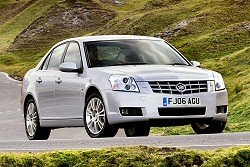 Trying to spread its newfound success to Europe, Cadillac is debuting in Geneva its latest effort, the BLS. Based on the Epsilon platform that underpins the Saab 9-3 and Chevy Malibu, the Cadillac BLS is a compact four-door sport sedan that takes aim at cars like the Audi A4.
The BLS will only be available in eco-conscience Europe, and the engine lineup reflects that. A turbo-diesel will power a Cadillac for the first time; the 1.9-liter unit joins three gasoline offerings. The design of the car is uniquely Cadillac, and certainly unlike anything currently on European roads.
It shares the same upright grille and headlights as the other neo-Cadillacs, and from the back it looks very similar to the new STS. But we think GM could have done a better job masking the steering wheel--it appears to have been ripped from a Saab 9-3 intact and disguised only with a feeble Cadillac sticker in the center.
The exterior styling is distinctive with a wedge-shaped profile and a look that isnt going to be confused with any other marque on the road. The huge vertically-stacked headlights and tail lights are interesting design touches and there are V-shaped motifs within the grille and the number plate surrounds. The crease along the cars hipline looks sharp enough to slice prime rib and the interior is certainly a cut above the usual American fare. Theres often a disappointing sensation of getting into a cheap hire car at LAX whenever we sit in an American import but the BLS offers a clean if not adventurously styled fascia.
Three trim levels will be available across the BLS range. The standard trim level, SE, offers 16-inch alloy wheels, engine immobiliser, front, side and curtain airbags, driver trip computer, three-spoke leather steering wheel with audio control buttons, cruise control, air conditioning, front and rear electric windows, a seven-speaker audio system with CD player, and Piano Black interior decor trim. The intermediate trim level, Luxury, features additional standard equipment including Cadillacs StabiliTrak electronic stability programme, wipers with rain sensors, an eight-way electrically adjustable drivers seat, dual-zone climate control and 17-inch alloy wheels. Red walnut wood veneer trim enhances the interior decor.
The top of the range Sport Luxury trim level additionally offers 18-inch alloy wheels, sports suspension, xenon headlamps, and heated, electrically adjustable leather front seats with memory function. The Sports Luxury package will initially only be offered with the 255bhp 2.8-litre V6 petrol engine. Perhaps Cadillac could have done a little more with the steering wheel that looks a little too much like a hastily rebranded Saab item.
"The Cadillac BLS offers distinctive styling, sensible running costs and a genuine alternative to the usual suspects"
The engineering underneath the car is tried and tested GM fare. That means that youll get a front wheel drive chassis with a choice of either a 175bhp 2.0-litre four-cylinder turbo model or a 2.8-litre V6 turbo that punches out a hefty 255bhp.
Theres even a 1.9-litre direct injection turbodiesel engine thats good for 150bhp, a first for Cadillac. Itll notch off the sprint to 60mph in just 9.3 seconds but the in-gear acceleration times that really indicate a diesel engines torque response have been slashed dramatically.
The 1.9-litre TiDs powertrain includes the most advanced diesel particulate filter on the market, enabling Euro IV emissions compliance - an essential requirement for many company car drivers. Unlike other particulate traps, it is maintenance-free and self-cleaning, requiring no additives or periodic replacement. In order to clean the filter and to keep the exhaust flow as free as possible, these deposits are periodically burnt off by short pulses of over-fuelling.
These briefly raise exhaust temperatures to the required level of 600º C. The process is automatically initiated when back pressure in the exhaust system reaches a certain level and is completely undetectable by the driver. The self-cleaning process takes place whenever necessary, irrespective of throttle load or engine temperature. Pricing looks sharp with the entry-level 2.
0-litre just slipping below the £21,000 barrier at £20,728, while the 1.9-litre turbodiesel opens at £21,473. Opt for the range-topping 2.8 V6 model and youll need to find £30,998.
Vehicle type: front-engine, front-wheel-drive, 5-passenger, 4-door sedan
Price (U.K.): $34,870
Engines: turbocharged and intercooled DOHC 16-valve 1.9-liter diesel inline-4, 150 hp, 236 lb-ft; DOHC 16-valve 2.0-liter inline-4, 175–210 hp, 195–221 lb-ft; turbocharged and intercooled DOHC 24-valve 2.8-liter V-6, 255 hp, 258 lb-ft
Transmissions: 5- or 6-speed automatic with manumatic shifting, 5- or 6-speed manual
Wheelbase: 105.3 in
Length/width/height: 184.3/69.0/57.9 in
Curb weight: 3200–3600 lb
Monday, August 19, 2013
Acura RL review
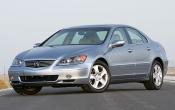 In all frankness, Acura had been out of the loop for awhile when it came to building a top-notch luxury/performance car. In recent years, the company has come up with several vehicles that have been a kind of rebirth for the luxury division of Honda. The MDX sport-utility continues to be popular five years into its life cycle. The tired Integra was put to pasture and replaced by the quick and much more sophisticated RSX.
More recently, the sporty and well-appointed TSX and TL came along, giving extra credibility to the notion that a reinventing of the Acura name could actually work. The 2004 model year is the last year for the current RL, so if you like that sort of 1990s-era luxury sedan, youd better get one now. Youll probably get a really great deal on a 2004, because once the buying public gets a look at the new one, we suspect high demand for it will promote generous discounts on the outgoing model.
Inside and Out
VTEC, ATTS, and AWD are nice, but all have been seen by the world before. Its hard to sell a car on performance alone these days, so Honda made sure to take the innovation lead in creature comforts.
Lets start with something everyone can enjoy: audio. The standards of sound have been rising just as fast as the standards of speed, but Acura stands out front for the moment. Its hard to ask for more watts than 260, more speakers than ten, more discs than six, or more formats than AM, FM, XM, CD, MP3, and DVD-A. That last one is exclusive to Acura, who has been among the first to bet on DVD Audio as the next universal format to supplant the aging compact disc. And unless you completely ignore the world of electronics, you have no doubt heard the number 5.1 tossed around a few times. That refers to the number of channels through which audio passes, and it has been the standard of home theater for years. The RL brings this standard to cars, which are hopelessly stuck in a two-channel stereo world.

Unfortunately, the sampler discs provided by Acura were aimed at a generation of journalists a tad past their prime. (Grover Washington? Steely Dan??) Given no familiar material to work with, all my judgment could tell me was that DVD Audio sounds great. How great compared to CD, I cant say, but I am pleased with the life this system brought to my MP3s. I also came to appreciate XM radio more than I expected. It was refreshing to hear a station play more than the same six songs in rotation, and to hear tunes that have been off the air for years, thanks to FM radios policy of banishing any song to the trash heap after three months.
Another nice touch is the key, which youll never have to touch again. Most people past adolescence might recall the days when the act of unlocking a car required the Herculean effort of removing a key from your pocket, inserting it in a keyhole, and turning it. At some point in the ‘90s, we cut that down from three steps to two: removing a remote from your pocket, then pressing a button. Acura cut it down to zero: as long as the remotes in your pocket, you can open the door. You can also start the engine. In fact, if the remote is within two feet of the car, you can do pretty much anything. This might not be the same as finding a cure for cancer, but its close.
Thanks to BMW, todays standards dictate that the RL wouldnt be a luxury car if it didnt have a tyrannical computer screen in the middle of the dash that served as the gatekeeper for every possible function of the car: navigation system, audio, climate control, trip computer, Bluetooth cell phone hookups, etc. Well, it does, so it is. And yes, theres a big central knob that you will be pushing and rotating a lot, but at least the majority of climate and radio controls have their own buttons. Heres my take on the matter: three minutes leads to frustration; three days and almost everything becomes second-nature. It takes memorization and getting used to, but then you get used to it, and it makes sense. This contrasts sharply with all the hearsay on BMWs iDrive, which frustrates everyone to no end. Still, that doesnt mean Acuras system isnt distracting, free of redundancies, or wouldnt be better off with normal controls. And the systems failure to understand simple voice commands makes this Acura a foreigner in need of deportation. When a car comes with an hour-long tutorial DVD, you just know theres bad news ahead.
Acuras navigation system, already praised for its easy operation, stands as far above the competition as does its audio system. No surprise, then, that theyre connected. Unlike your unreliable AM radio station, which probably sends updates every ten minutes (if youre lucky) on whatever areas they feel like reporting on, the RL sends real-time traffic updates every minute for every major metro area in the continental U.S. through the XM band. The next time youre stuck in a freeway traffic jam, dont look for any Acura RLs. Their drivers will have already known something you discovered the hard way. Two personal complaints of the nav system: a non-constant scrolling rate, and breaks in the display when doing so.
The rest of the interior is first-class. Very soft (and perforated) leather, smart cupholders, drivers seat memory, sun-sensing dual-zone climate control, auto-dimming rearview mirror, rear air vents, rear sunshades, xenon headlights that swivel in turns, and all that other stuff is here. The only gaffe is a center console that, if it were 1 mm wider, could comfortably fit the DVD Audio discs it was probably designed for. Oops.
Luxury has other costs besides money. The power tilt/telescope steering columns need to slowly retract or return when you turn the car on or off feels like a waste of time, especially when youre struggling to turn a moving ignition switch. Also, toeroom under the power front seats is cramped, and the center-rear passenger is perched too high to have any headroom, making the RL an even less viable five-passenger car than the Accord.
Other Thoughts
The outgoing RL was never a real contender in the luxury sedan world, as other cars always seemed to offer more luxury, style and performance. The one thing this car has always offered is impressive value, but were not altogether sure thats the kind of thing that rings true with buyers in this segment who typically have flexible budgets.
So the old car is mediocre and the new one is really awesome. Sure, weve heard that story a thousand times if weve heard it once. Even so, the new version of the RL is truly new and has almost nothing in common with the old one. In fact, the new RL could be called overkill, as it offers features we never would have thought of let alone expected on a luxury performance sedan. Acura is well aware that the outgoing RL was not a contender against the likes of Audi, BMW, Jaguar and Mercedes-Benz, and the company set out to fix the problem by designing a car that has the look and feel of a true luxury vehicle combined with the stunning performance of a German sport sedan.
Final Word
This car is packed with so much advanced and complex technology, we cant help but think we should reserve final judgment until we spend more time driving it. Many of the advanced features mentioned here can only be properly evaluated over the course of a week or so, as it is the integration of that technology into a persons everyday life that determines its success or failure. Our preliminary impression is that the new Acura RL is an excellent car that now fits in with and boosts Acuras desired image as a builder of sporty and luxurious cars. Like the TL and TSX, the 2005 RL offers a performance edge normally reserved for such brands as Audi and BMW. The car combines tons of technology (both electronic and mechanical) into a package that is good-looking and fun to drive — its the seamless integration of that technology plus real luxury that makes the new RL such an excellent sport sedan.
Sunday, August 18, 2013
Used Car Review 2003 Enzo Ferrari
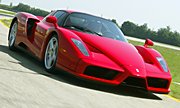 Introduction
After more than a year of rumors, false names and spy photos, the Ferrari Enzo finally made its debut at the 2002 Paris Motor Show. Named in honor of the Italian auto maker’s founder, the Enzo is the latest special edition supercar to come out of Maranello. Past limited-run Ferraris have included the GTO, the F40 and most recently the F50 which celebrated the automaker’s 50th anniversary. While the initial plan was to build only 349 examples of the Enzo, Ferrari president Luca di Montezemolo announced that 50 additional Enzos would be built for a total of 399. Pricing has not been announced, but it doesn’t really matter – the entire run has already sold out.
Pros:
I like Enzo Ferrari, beacause not because of its speed & accelleration, because what it has done to racing. Since 1975, racers have been wishing to accomplish a good type & nessecery way.That is what I like about Enzo Ferrari.
Cons:
The design and styling of this car looks horrible compared to my F1. If you want the best of the best, wait until the Bugatti Veyron comes out...that car has a great chance of surpassing my McLaren F1.
Overall Review:
This car is known to be one of the greatest sport cars. It will go down in history with all of the other super cars. I have pulled many strings and worked very hard to even get a look at this car. My enzo (#274) off the assembly line is the greatest car I will ever own throughout my collection. I could tell you all of the stats and how it is so perfect in each an every way.
I could tell you that I get goos bumbs just looking at it when I take it out for a test drive on the track every two months or so, but it still wouldnt describe this car. I bought this car for me and it is the one car that will make me feel distingushed and imprtant unlike anyone else in the world. So my overall review is in the end its worth it, for me.
Over all I would recommend the Enzo to anyone with a healthy savings and a tolerance for adrenaline "jet lag". Its styling completely matches its proformance and keeps witht the flow in the way the car handles on straight aways and even corners. Dry or wet pavement, the Enzo goes toe to toe with the best I have driven and dosent miss a beat. I love the fact that no matter how let down I am about how the day has gone I can enjoy the "partnership" of an equally hard working machine. "kudos" - if you will- to Ferrari for living up to the pre-sale hype.
Saturday, August 17, 2013
Prices Review 2006 Toyota 4Runner
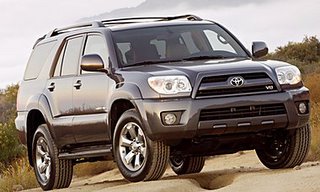 The Toyota 4Runner has become increasingly marginal in the competitive midsize sport-utility vehicle market for the past few years, but the significantly redesigned version brings this Toyota up to speed again.
The 4Runner has a familiar name, having been introduced in 1985 with sales of more than 1.2 million units. But the 2002 version was saddled with a 6-year-old design that had to compete with a large number of new sport-utes unveiled in the past few years.
Redesigned and re-engineered for the 2003 model year, Toyotas long-running 4Runner is still a capable off-road sport utility vehicle with rugged body-on-frame construction.
This new fourth-generation 4Runner is bigger than its predecessor, offers a first-ever V8, adds a number of new features including electronic control for steep downhill descents off road and optional curtain and side airbags and provides an improved, bit of refined ride.
Minor trim and feature changes mark 2006 for Toyotas truck-type midsize SUV. 4Runner comes in SR5, Sport Edition, and Limited trim, each with specific styling touches. All offer a V6 or V8 with a 5-speed automatic transmission and standard rear-wheel drive. The V8 can be ordered with all-wheel drive, the V6 with 4WD that can be used on dry pavement. Both systems have low-range gearing and include hill descent control designed to limit speed down steep slopes. Hill ascent control--to avoid sliding backward--is standard linewide.
Pricing is changed, too. While the starting manufacturers suggested retail price is around $27,000 now, a 4Runner with new V8, four-wheel drive and a host of options can actually carry a lofty price tag of more than $42,000.
This is a far cry from the pricing and amenities offered on the truck-ish, rather barebones SUV that the 4Runner started out as in the mid to late 1980s.
Two new engines, old 4-cylinder dropped
The 4Runner now is available with 6- and 8-cylinder engines. The 4Runners 4-cylinder power plant from last year is gone.
The 2003 base engine is a new, 4.0-liter V6 capable of 245 horsepower and 282 lb-ft of torque at 5200 rpm.
Power here is pleasant and not overly brutish, even if torque is not strong enough to snap your head back.
Both performance numbers top those of the Nissan Pathfinders V6 and the inline 6 in the Jeep Grand Cherokee. In fact, the 4Runner V6s 245 horses even top the 235 horsepower provided in the vehicles up-level V8.
The pulling power, or torque, is highest with the 4.7-liter, double overhead cam, i-Force V8. Its a full 320 lb-ft at 3400 rpm.
This compares with 326 lb-ft at 3600 rpm in the Grand Cherokees High-Output V8.
In the test 4Runner with V8, the vehicle felt like it had plentiful power, no matter if I was climbing hills off road or passing vehicles on the highway.
I needed to only depress the accelerator pedal slightly and the power would come on. If I slammed down hard on the accelerator at startup, there was strong power that pushed my head back against the head restraint.
Shifts were smooth from the 5-speed automatic, which is a first 5-gear automatic in a Toyota truck. The 4Runner V6 comes with a 4-speed automatic, though.
For both engines, Toyota recommends 91-octane gasoline.
Note the towing capacity for the 4Runner remains at 5,000 pounds, the same as last years model.
Safety Features
Safety features include an option that has front side airbags working with front and rear curtain-shield airbags.
The 4Runner has a generally smooth ride, but it isnt as smooth as rides from car-based sport-utility vehicles—or those with an independent rear suspension.
The variable-assist power rack-and-pinion steering is suitably fast. Standard anti-lock brakes are easily modulated despite a rather soft pedal and have brake assist and electronic brake-force-distribution features.
Extra effort is needed to get in and out of the tall 4Runner, and its narrow running boards are more of a hindrance than a help for those with large shoes. At least the windshield posts have large grab handles to assist entry and exit—especially for elderly folks.
Lots of Driver Assists
The 4Runner is loaded with driver assists. One is its Hill-start Assist Control system, which should be especially appreciated by those living in hilly areas. The system comes on all 2- and 4-wheel-drive versions and is a "first" for a sport ute.
By controlling the brakes, Hill-start increases stability for improved control on steep upgrades and stopping and starting on slippery surfaces. It helps prevent the 4Runner from rolling backward or slipping sideways during transition from a stopped position to climbing an upgrade.
Electronic traction control and anti-skid systems also are standard.
"The best vehicle I have owned!"

Pros:
A very well put together and thought out SUV. V8 Power is excellent. The new rims, exclusive to the Limited, are very sharp. Fit and finish are outstanding. Input for your Ipod now standard. Extra power outlets to handle everything from a radar detector to a laptop.
Cons:
A few very minor details. The power window and lock buttons are in a strange place.
Overall Review:
The 4Runner has everything that you want in an SUV. Good power and above average fuel economy for a medium to large SUV define the 4Runner. Interior styling is modern and pleasing. The seats hug your body and make for a comfortable ride. The suspension gives you the feel of a luxury sedan. Good on or off road with the 4x4 option. This is no Explorer or Envoy. This is far beyond anything that they offer.
Overall, this is a great SUV. Its luxurious, powerful, and isnt the typical soccer mommy SUV. We purchased this vehicle as a kid hauler, towing vehicle, and light off road machine. It does all of very well. I highly recommend! Cheers.
Monday, August 12, 2013
Toyota Kluger CV Review
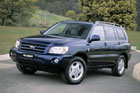 OVERVIEW
This is the best automatic I have had any experience with. Very smooth in both up shifts and downshifts. No drag and no clunk as it goes into gear after being in Neutral.
The fact that you have this problem points to something different in your vehicle that must be fixable. It is a pity that Toyota/Lexus does not appear to take responsibility. The fact is that they are not alone - just check out horror stories from other manufacturers. When you get a lemon you are in trouble. The sooner that Australia has anti-lemon consumer laws like the US (surprise on this) the better for consumers.
Toyota Australia wanted the Highlander name, but Hyundai -- which uses it as a grade name on the Terracan four-wheel drive -- would not relinquish the moniker. Hence Kluger, which is said to mean clever or very clever in German.
The Kluger is a deceptively large vehicle, appearing in pictures to be no bigger than a Subaru Forester. In fact, the Kluger is 4.7m long, 1.83m wide and around 1.7m tall, making it between 10-25cm bigger than Forester in all dimensions. A Commodore sedan, by comparison, is another 10cm longer than Kluger.
Klugers basic wagon package surrounds a powerful 3.3-litre V6 engine mated to all wheel drive and high ground clearance. Toyota believes the Kluger, and vehicles like it, will be the next big thing in Australia. So much so that Toyota hopes to build a solid enough business case to stop importing and start producing the vehicle at its Altona plant by 2007.
For that to happen Australians must show an annual appetite for 30,000 Klugers, or around 2500 per month. Initially Toyota believes it can sell around 500 a month, but expects sharp rises in sales and popularity when Holdens six cylinder Adventra and Fords Territory join the fray -- and increase market exposure of crossover vehicles -- late in 2004.
The Kluger is available in three models, CV (tested), CVX and Grande.
The Kluger range is powered by a 3.3 Litre quad cam V6 that produces 172kW at 5,600rpm and 328Nm of torque at 3,600 rpm. The entry level CV and mid grade CVX have a viscous coupled centre limited slip differential and a limited slip rear differential. The Grande has electronic all-wheel-drive control using the electronics of its vehicle stability control and traction control systems.
SAFETY
Klugers safety story begins with its vehicle dynamics, which are far more impressive and responsive than a traditional four-wheel drives. Though not quite at the level of a passenger car, Klugers relative sure-footedness will improve your chances of avoiding a crash.
All Klugers get all-wheel drive, as well as anti-lock disc brakes with EBD and BA (Electronic Brakeforce Distribution - sends braking force to the tyres with the most grip; Brake Assist - detects a driver-initiated panic stop and applies maximum braking).
Vehicle stability control (VSC) and traction control (TRC) are standard on the Grande, an optional extra on the CVX and not available on CV.
Passive safety includes front airbags for driver and passenger and pretensioning seatbelts with force limiters. Klugers bodyshell is said to be "highly rigid" by Toyota, which provides both a strong protective shell and the basis for a nimble and responsive chassis.
COMFORT
Toyota vehicles are nothing if not efficient and practical, sometimes to the detriment of emotional attraction. No matter, because theyre also supremely capable and keenly priced, and Klugers no different.
Interior space and features are unremarkable in their efficiency. Both the front and second row of seats are comfortable and roomy enough for an average sized adult. The front seats are slightly moulded to reduce body sliding, particularly the backrest, though not enough for our liking. Headroom is good in both rows, and access to each is made easy by wide opening doors and cars high stance.
The third row of seats -- fitted standard to CVX and Grande models, optional on CV -- is a kids-only domains. Adults will have difficulty getting their bigger feet into the footwell, the depth of which leaves knees awkwardly high. The third row does fold perfectly flat when not in use, freeing up plenty of luggage space in the boot area.
We had some difficulty finding a comfortable driving position, despite the fact the drivers seat slides, tilts and raises. The steering wheel only tilts, meaning the pedal to wheel ratio is always a compromise. That said, driving the car is no problem, visibility is very good in all four directions, and large wing mirrors are easy to use.
Swing-type arm rests on the two front seats come in handy on longer trips.
FEATURES
Klugers most attractive features are undoubtedly its people-carrying capacity and on-road performance, coupled in a four-wheel drive body. The popularity of traditional four-wheel drives has grown phenomenally since 1990, due as much to their high driving position and carrying capacity as to their off-road ability.
Toyota calls Kluger a car-based SUV, which "offers passenger car-like comfort and performance." Well take a closer look at that statement in the "On The Road" section, but for now lets check out the range.
Three models comprise the Kluger range in Australia -- CV, CVX and Grande -- with pricing starting at $43,990 and topping out at $58,990. All three models share the same engine and transmission package, namely a 3.3-litre V6 mated to a five speed automatic transmission. All three models have all-wheel drive, mechanical on the CV and CVX and electronic on the Grande.
All Klugers include power steering, cruise control, climate control air-conditioning, tinted rear-side windows, trip computer, CD player and full-size spare wheel. Features and safety equipment increase from model to model in tune with the price; the CVX and CVX are the best value for money, and are expected to appeal to more than 90 percent of all customers.
The higher grade CVX adds alloy wheels, roof rails and fog lights on the outside. Power front seats, a six-stack CD player and rear-seat heater controls compliment the interior.
Top of the line Grande adds bigger 17-inch wheels, sunroof and a rear spoiler outside, touch-screen satellite navigation inside. In addition, front side airbags and curtain airbags, electronic four-wheel drive, traction control and vehicle stability control make the Grande the safest of all Klugers.
ON THE ROAD
Kluger fulfils Toyotas claim of having more passenger car-like on-road manners than a four-wheel drive, but its still a little way off handling like a true passenger car. Excessive bodyroll in corners is Klugers main problem in an otherwise faultless repertoire.
Kluger handles bumps and ripples in the tarmac with sure-footed efficiency, never losing a step or troubling the steering wheel. Taken to the edge of tyre grip the Kluger pushes gently wide as the tyres squeal their displeasure. At cruising speeds the Klugers independent suspension delivers a smooth unruffled ride to occupants enjoying the well-insulated cabin.
The 172kW V6 engine is more than adequately suited to this application, providing strong acceleration off the mark, and never short of herbs on steeper climbs. It settles comfortably into a 100km/h cross-country jaunt, the engine noise barely registering in the cabin. Kluger, like some other Toyota products, is limited to 180km/h -- which is unlikely to be a problem on Australias heavily policed roads.
The five-speed automatic gearbox is inconspicuous in its operation, smoothly transiting between the gears. Its reluctant to change down, requiring an exaggerated push on the throttle to encourage a cog-swap. For those, like us, who prefer a little more control, Toyota offers manual selection on all five gears via the overdrive button (4) and 3-2-1.
Klugers power assisted steering is slow to wind on, requiring too much input for the desired result. Weighting is on the too-light side of perfect, with little weight build up under stress. It is accurate, and cushions the driver well from road bumps, but lacks feel. Klugers turning circle is slightly larger than the average family sedan, but certainly smaller than most big four wheel drives.
Which is really what the Kluger is all about: A very good attempt to build a true crossover vehicle that successfully combines passenger car dynamics and performance in a four-wheel drive. Is it worth buying? Yes, if youre after a psuedo-four wheel drive for mostly urban use.
Verdict
One of the most competent of the soft-roaders with impressive performance. Styling is fairly bland and not as striking as its sister-under-the-skin Lexus RX330. It ought to be called the RAV6.
Sunday, August 11, 2013
MINI Cooper Review
 Accompanying the introduction of the MINI Cooper and MINI One into the German market, the BMW Group is presenting a future-oriented concept version of the MINI.
Consistently designed for hydrogen power, the MINI Cooper hydrogen package study based on the MINI Cooper proves that the combustion engine can provide an excellent combination of emission management, low costs, a good package and driving pleasure using a combustion engine free of CO2.
The single-mode 4-cylinder power unit based on a series-production MINI engine could therefore well come with a cryogenic fuel/air mixture formation efficiently cooling the mixture drawn into the engine, giving the cylinders a better charge and boosting both engine power and efficiency in the process. In its output and consumption, the hydrogen engine will therefore equal the high standard already achieved by petrol engines today. A further feature is the contoured hydrogen tank fitted for the first time beneath the rear seats, ensuring that the supply of hydrogen, while offering the same capacity, does not take up more space than the conventional supply of petrol. In other words, both the passenger and luggage compartment are just as large as before.
The MINI is the future-oriented re-creation of a genuine original. In the guise of the MINI One and MINI Cooper, the new car offers the best technology you can find today in this segment, while at the same time bringing back the genes and characteristics of the original Mini in many emotional components.

The MINI is ingrained in British culture and even though it is now owned by BMW its spirit remains British through and through. BMW have taken this motoring icon of the last four decades and transformed it into the most advanced and entertaining car of its size on the market.
Built in Oxford (the original home of the Morris Minor) the MINI retains all the cheeky charm of its predecessor combined with German reliability.

With the launch of the new MINI, BMW have rekindled public enthusiasm for the MINI brand worldwide and it is now available in over 70 countries. In April this year the MINI reached an important milestone when the 100,000th MINI, a silver Cooper S was registered in the UK.
The range now includes the MINI One, MINI One D (diesel), MINI Cooper, MINI Cooper S and the MINI Convertible (launched this summer). The only model lacking is an estate (traveller).
Summary
The Mini Cooper is a well-executed piece by every measure. Its the total package that makes it the excellent value it is: appealing appearance inside and out, excellent performance, notable engineering, numerous safety devices and the simple delight of being in and around it. It gets excellent gas mileage and it will make your garage seem enormous.
About 10,000 Mini Coopers were sold in the United States from 1960-67. Still a sensation, the current Mini was introduced in late March 2002 and posted 15,000 sales in the first seven months. New owners were delighted by the Minis design, features, and performance, according to a J.D. Power and Associates survey. Wed certainly be delighted to own one.
Model Line Overview
Model lineup: Cooper ($16,425); Cooper S ($19,425)
Engines: 115-hp 1.6-liter SOHC inline-4; 163-hp 1.6-liter SOHC inline-4
Transmissions: 5-speed manual; 6-speed manual; Continuously Variable Transmission (CVT)
Safety equipment (standard): ABS, Electronic Brake-force Distribution, Corner Brake Control, Electronic Traction Control; dual frontal and side-impact airbags; front and rear head-protection system
Safety equipment (optional): Dynamic Stability Control; run-flat tires
Basic warranty: 4 years/50,000 miles (3 years/36,000 full maintenance)
Assembled in: Oxford, England
Friday, August 9, 2013
2007 Cadillac Escalade ESV Review Road Test
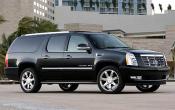 Very impressive feature and greatest design of the Cadillac. i love that car. Compartative price must be more flexible.
Favorite Features: The drivetrain and all the comfort and convenience features are fantastic. The Intellibeam headlamp system is great on those dark roads switching your high beams on and off.
Interior Design and Special Features
The ESVs two-tone dash has graceful lines that easily accommodate a large, colorful navigation screen and faux walnut inlays (although at this price, they should be real wood). The nav screen has a user-friendly touchscreen interface, and all controls are easy to find and use. Soft-touch surfaces are everywhere, as they should be in this class, but there are still a few cheap plastics thrown into the mix. The Escalade can be equipped to accommodate six, seven or eight occupants. To improve third-row access, there is a power fold-and-flip option for the second-row seats. Unfortunately, the third-row seat still doesnt fold into the floor as in the ESVs competitors and the 50/50 sections are cumbersome to remove. Maximum cargo capacity is 137 cubic feet, with a generous 46 cubes available behind the third row. A roof rack is standard.
Safety
All Escalades come standard with four-wheel antilock disc brakes, the StabiliTrak stability control system and full-length side curtain airbags. Not only will these airbags inflate in a side-impact collision or rollover, but also in serious frontal-impact collisions in which occupants need all the help they can get. In addition, theres another sensor that identifies rear impacts and activates the seatbelt pre-tensioners to help front-seat occupants avoid whiplash. Rear parking sensors are standard on every Escalade ESV, and vehicles equipped with the navigation system incorporate a rear camera system as well. The ESV also comes with a tire-pressure monitor and the OnStar communications system.
Powertrains and Performance
The Escalade ESV comes in all-wheel-drive configuration only. Its sole power plant is a torque-rich 6.2-liter V8 that develops 403 hp and 417 lb-ft of torque. A six-speed automatic transmission is standard, and it includes both a tow/haul and a manual shift mode. Manual shifting is a tad awkward with the Escalades old-fashioned column shifter. Trailering preparation is standard, and the ESV can tow a maximum of 7,800 pounds.
Body Styles, Trim Levels and Options
A full-size luxury SUV, the 2007 Cadillac Escalade ESV is available in a single trim level. Standard equipment includes 18-inch alloy wheels, HID headlights, 14-way power-adjustable front seats with multilevel heating, memory settings for the driver, leather upholstery and faux wood trim. Tri-zone automatic climate control, a 10-speaker 5.1 surround-sound Bose audio system with an in-dash CD/DVD changer, a remote start feature, a power rear liftgate and power-folding exterior mirrors are also standard. The ESV has heated bucket seats in the second row, and a bench seat is also available. Options include 22-inch chrome wheels, multilevel cooling for the front seats, a heated steering wheel, a navigation system with a rearview camera, a rear DVD entertainment system, power-folding second-row seats and a sunroof.
Driving Impressions
On the road, the nimbleness of the Cadillac Escalade is a pleasant surprise. The steering is light and reasonably precise, a nice compromise between the weight of the BMW X5 or Audi Q7 and the vagueness of the Lincoln Navigator. In spite of having a live-axle suspension (as opposed to an independent suspension design, as found on some of the newest SUVs), the Escalade manages bumps beautifully, thanks to the road-sensing Autoride suspension.
The interior is also remarkably quiet, enhancing the ability to hold hushed conversation as well as hear the surround sound system without extraneous noise. Even more remarkable is the plush ride. The Escalade models weve driven were shod with the optional 22-inch wheels and low-profile tires, and wed expected them to transfer more road vibration and harshness than they did. We havent driven any of these vehicles with the 18-inch wheels, but expect them to offer even softer ride characteristics. Handling crispness and body control are also impressive, considering the Escalades formidable mass.
All Escalades are powered by a monster of an engine: a huge 6.2-liter V8 that produces a whopping 403 horsepower and 417 pound-feet of torque. Acceleration is astonishing for such a tall, heavy vehicle. A pleasing growl is emitted when accelerating briskly; otherwise, the engine is virtually silent.
Certainly, there is plenty of power to pull a trailer with ease. The Escalade is rated to tow a 7500-pound trailer, a rating that is curiously lower than that of the Infiniti QX56 and Lincoln Navigator in spite of Escalades significantly more powerful engine. Then again, tow ratings are not an exact science. Installing a trailer is made easier by the Escalades rearview camera, which incorporates a camera in the liftgate to provide a view behind the vehicle when backing up projected onto the navigation screen. Its a very useful feature when parallel parking or whenever backing up close to another object.
All Escalades come with a six-speed automatic transmission that shifts imperceptibly except during full-throttle acceleration. A Tow/Haul mode holds gears longer, or the driver can select gears manually via a button on the shift lever. The multi-information display in the instrument cluster clearly displays the selected gear.
The Escalade comes with either rear-wheel drive or full-time all-wheel drive; EXT and ESV come only with AWD. The all-wheel drive system is on-road biased, with no low range for creeping through boulder fields.
As indicated, the Escalades four-wheel disc brakes come standard with ABS and electronic brake force distribution (EBD). The powerful brakes proved to be quite responsive and more than up to the task of bringing the big truck to a halt with little drama and surprisingly little brake dive. The pedal feel was good, if not as pleasingly firm as its German competitors.
The Stabilitrak electronic stability control system manages wheel slip by applying the brakes at the slipping wheel without interrupting power deliver to the wheels with grip. Stabilitrak also helps maintain stability in corners by braking individual wheels when the vehicles path doesnt match the drivers intentions.
Fuel economy for the Escalade is estimated at 13 miles per gallon city and 19 highway, which isnt exactly miserly but not as bad as it could be, considering the power and weight of the vehicle. And its right in line with competitors such as the Infiniti QX56 (13/18 mpg) and the Mercedes-Benz ML500 (15/19 mpg).
Whats New for 2007
The Cadillac Escalade ESV is completely redesigned for 2007. Its about the same size as last years model but features an all-new fully boxed frame, a 403-horsepower 6.2-liter V8 and a significantly upgraded interior.
Pricing for the 2007 Cadillac Escalade ESV
2007 Cadillac Escalade ESV $54,736 $59,175
Sunday, August 4, 2013
Car Review Ford S MAX 2 5 Titanium
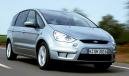 Overview
Its the most eagerly awaited new Ford since the Focus - and with sales of large family cars in freefall, its crucial to the firms success. The all-new S-MAX is the blue ovals practical vision of the future, and promises a fun driving experience and a flexible seven-seat cabin, wrapped up in a sporty body. On sale in June, the new MPV will be priced from £16,995. Its more costly than the traditional Mondeo, but is it really as good as it sounds? Auto Express got behind the wheel to find out.
Based on the daring SAV concept - which debuted at the 2004 Geneva Motor Show - the S-MAX features bold lights, a steeply slanting screen and rakish profile. As a result, it is the sportiest-looking MPV yet launched.
The styling also disguises the cars size. Longer than the current Galaxy, its only 50mm shorter than the forthcoming model - which Auto Express drove last week (issue 904). The two cars share suspension and chassis components, which will also be used to underpin an all-new Mondeo.
IN THE CABIN
Behind the wheel
The S-Maxs driving position is lower than many MPVs; its a matter of personal taste whether this suits you or not. Either way, the seats and steering wheel have plenty of adjustment, and the dash is clearly laid out and places everything in easy reach. Visibility – as with most MPVs – is compromised slightly by the four front pillars.
Space & practicality
The S-Maxs ample headroom and legroom mean that five people can sit in comfort. Access to the rear seats is good and kids will be happy there, but the low-slung seating position means adults wont relish long journeys. The five rear seats fold flat rather than lift out, and when used as a five-seater theres a huge, well shaped boot. Even with all seven seats in use, theres still space for a couple of bags.
Equipment
Every S-Max comes stuffed with airbags – there are front and side airbags for the two front seats, while window airbags cover the front two rows. Theres also an airbag next to the steering column to protect the drivers knee. Anti-lock brakes are standard, but stability control is expected to be a cost option on most models. An alarm and deadlocks are fitted to all models.
ON THE ROAD
Performance
The S-Max has two petrol engines (a 143bhp 2.0-litre unit and a 217bhp turbocharged 2.5-litre motor), and two turbodiesels (a 123bhp 1.8-litre and 138bhp 2.0-litre). So far, weve only driven the 2.5-litre petrol, which uses a version of the Focus STs engine. Our experience of the 2.0-litre diesel in the new Galaxy suggests its a good performer.
Ride & handling
Ford reckons the S-Max is an MPV for those that enjoy driving. We agree; informative steering, plenty of grip and good body control make it surprisingly sharp on twisty roads, although 2.0-litre diesel versions have a less involving steering system. When family duties take priority, the suspension is supple enough to provide good comfort.
Refinement
Although the S-Maxs large glass area creates more wind noise than many saloon rivals, it does a great job of shutting out road and suspension noise, so its an impressively quiet cruiser. Weve yet to drive all variants, but we can confirm that the 2.5-litre petrol engine is exceptionally quiet, with just a cultured rumble when extended.
Quality & reliability
The S-Maxs interior design is more conventional than rivals such as the Citroen C8 and Renault Espace, but its stylish, solidly built and there are plenty of appealing, soft-touch materials on the top of the dash and doors. Lower down and further back the plastics arent as attractive, however.
Safety & security
Every S-Max comes stuffed with airbags – there are front and side airbags for the two front seats, while window airbags cover the front two rows. Theres also an airbag next to the steering column to protect the drivers knee. Anti-lock brakes are standard, but stability control is expected to be a cost option on most models. An alarm and deadlocks are fitted to all models.
Wednesday, July 31, 2013
Used car Review 2003 Mercury Marauder
 The new Mercury Marauder takes its name from the big Mercury muscle cars of the 1960s, but its true spiritual ancestors are two black Mercury sedans that starred with Jack Lord in the long-running television series Hawaii Five-O.
Lord portrayed the granite-jawed Steve McGarrett, head of Hawaiis elite Five-O police unit, his demeanor cop-show tough, his hair a perfect North Shore wave, his car no standard police-issue Ford Custom 500 or LTD but a big black Mercury in which he stormed around Oahu.
"Steve McGarretts car is as much a character in the series as any of the people." So claims Karen Rhodes in Booking Hawaii Five-O, the best and as far as we know, the only scholarly tome on the cop show.
"The big, black Mercury sets a tone of power and intimidation," she continues. "Steve is . . . tough and threatening on his own, but the black Mercury adds a further dimension of strength, even a sinister darkness, to McGarrett." Thats some pretty impressive work for a 68 Park Lane and, later, a 74 Marquis, either of which, off-screen, might have been driven by your grandfather.
wenty-two years after McGarrett screeched his big black sedan to a stop for the last time, Mercury has served up a machine perfectly suited to the marques most telegenic enthusiast. The Marauder is a badass cop car with some major attitude.
The reborn Marauder first appeared not in Honolulu but in Las Vegas, as a concept car at the 1998 SEMA show. Considering what populates the miles of aisles at SEMA--wildly winged Honda Civics with hyperkinetic paint jobs, slammed SUVs on huge chrome wheels, bikini-clad babes stroking shock absorbers--Mercurys Grand Marquis in Darth Vader livery garnered a surprising amount of attention.
Walkaround
The Marauder, in its standard ebony paint, gives the same menacing vibes as a black leather jacket. The black monochrome treatment has even been given to the headlamps with only the reflectors spared the blackout treatment. The taillamp bezels are dark tinted as well for what Mercury calls a "serious, but understated appearance."
Up front, Cibie fog lamps are inserted in the front bumper, and the rear bumper has "MARAUDER" embossed in it while big dual 3.5-inch chrome exhaust tips protrude straight out the back.
A big car needs big tires, and the Marauder wears P235/50WR18 boots on front with wider, P245/55WR18 rubber at the rear. The larger rear tires give the Marauder a natural slight rake that enhances the performance image. Five-spoke forged aluminum wheels are eight inches wide and have cast into the wheel hubs the bas-relief image of Mercury, the swift messenger of the Roman gods and a Mercury revival from the Fifties.
The current Mercury logo is centered on the grille in a bright finish; we think the gods head logo should be here as well, but Mercury did not consult us on this. The exterior, according to Mercury representatives, was purposely kept simple because focus group attendees said theyd rather have it left plain to customize themselves.
Interior Features
Like Dorothy in Munchkinland realizing shes not in Kansas anymore, the driver of the Mercury Marauder knows hes not in a Grand Marquis.
The instrument panel has white faces, with a large round speedometer and tachometer flanked by smaller fuel and temperature gauges. The 140-mph speedometer incorporates a red-lit "Marauder" graphic.
Instead of a column shifter for the automatic transmission, a leather-wrapped shifter is mounted on a floor console that has two cup holders and a storage bin. An AutoMeter (a brand known to car enthusiasts) voltmeter and oil-pressure gauge are positioned just ahead of the shifter.
Marauders are also given dot-matrix gray trim accents on the instrument panel, while the dual eight-way power seats are finished in supple black leather, the best used in any Ford Motor Company product. Classic French stitching from earlier Marauders is revived for the 2003 edition. The seats were given extra padding for greater support, and of course theres a Mercury gods head de-bossed into the front seatbacks.
The optional six-disc CD changer for the 140-watt Alpine sound system is located in the trunk, where its not as convenient, especially if the trunk is loaded, though this is a quibble brought on only by the new in-dash CD changers. There is a single CD player, as well as a cassette player for those in the retro mood or those who enjoy books on tape. (Sorry, no 8-track player, though the radios AM band works well).
Filigrees aside, the interior delivers on the promise of the exterior with lots of room inside for five. Access to the cabin is easy through large doors, and finding a comfortable driving position is easy with the 8-way power seats, tilt wheel and adjustable pedals. The front buckets are wide (so much so that the seatbelt buckle end actually protrudes through the seat bottom cushion). The seats are soft, too. The back seat is wide and soft as well, with enough room across for three adult males, though the center rider loses foot room to the driveshaft tunnel of this rear-wheel-drive car.
The trunk is huge. If you need more luggage room than this, your name is Zsa Zsa and you should FedEx your steamer trunks of gowns ahead. The trunk organizer is nice to have, with adjustable section dividers, but not really necessary and offered on the Marauder, probably, mainly because its available on the Grand Marquis.
Driving Impressions
Fire up the engine of the Mercury Marauder and youll know this is no automotive Kansas. The V8 rumble from the dual exhaust announces that the Marauder is a true American performance car. The all-aluminum 4.6-liter engine was developed specifically for the Marauder, with four-valve-per-cylinder double-overhead camshaft heads. The compression ratio is 9.85:1, requiring premium fuel.
All this yields a power rating of 302 horsepower at 5750 rpm. Peak torque is 310 pounds-feet, and comes at a relatively high 4300 rpm. Mercury engineers specified a high stall speed torque converter for the automatic transmission, which means the engine can rev higher, reaching its power band before the automatic transmission transmits power, thus producing quicker acceleration. The engineers also biased the final drive selection, a 3.55:1 rear axle, for acceleration over fuel economy. The Marauder attained an EPA rating of 17 city/23 highway, impressive for a large car, so they obviously didnt go overboard. A limited-slip rear differential is used for better traction with beefy internals for durability.
The engine tuning works, as the Marauder accelerates with authority. Very few will be able to kick sand at the Marauder in the local stoplight grand prix. The base Grand Marquis, for example, is rated at 220 bhp, the Grand Marquis LSE at 235 bhp. The 1994 Impala SS produced 260 bhp, and was considered fast for its time. How our expectations change. Still, the Marauder weighs more than two tons, so the engine has its work cut out for it. Drivers who expect the Marauder to smoke its tires at every stop sign will be disappointed. Modern tires are much better than those of the Sixties, providing too much grip for this behavior. You can still spin the tires if you work at it. But otherwise, the power goes into acceleration, not tire spinning.
As good as the engine is, the new suspension is even better.
Mercury delayed introduction of the Marauder (originally a concept car displayed at the SEMA show in Las Vegas in late 1998) to use the new chassis of the 2003 Grand Marquis. This new frame shared by the Marauder, Grand Marquis, and Crown Victoria has new stronger hydroformed front rails, a new aluminum No. 2 crossmember and is generally more robust for improved stiffness. Chassis rigidity allows better engine and suspension mounting for better handling, and less noise, vibration and harshness transmitted into the body.
To this, Mercury stiffened up the Grand Marquis suspension, using special gas-charged monotube shock absorbers and, at the rear, air springs. A new "Gripper" anti-roll bar was used up front for quicker response and a better on-center feel to the steering.
How good does it work? We tried the Marauder in two venues. One was the south course at Pocono International Raceway, a combination of the NASCAR Turn 1 high banking and a twisting road course across the infield. The track allowed acceleration onto the banking and a top speed through the big curve of around 100 mph. In almost any other family sedan, if it could go that fast, the tires would be howling in protest. The Marauder was asking for more, balanced front to rear and holding on like a championship square dancer in a power swing-your-partner.
Through the infield, the Marauder handled like a sports car, a big sports car. It was easy to place it anywhere on the track, thanks to precise variable-ratio rack-and-pinion steering. The Marauder has what racers call "good turn-in," or transition from driving straight to turning. It also has remarkable transient response, the ability to change from turning left to right and back again. Part of the credit goes to the excellent BFGoodrich g-Force T/A tires, which combine great grip with ride comfort. The only thing marring our attempt at playing Rapid Roy That Stock Car Boy were the seats, which simply lacked the lateral support to counter the lateral force the Marauder can develop, and an imprecise shifter that hobbled attempts to shift the car manually in the infield.
We were impressed with the ability of the Marauder to brake straight and sure from more than 100 mph, both the 4-wheel disc brakes to slow the vehicle and the suspension and steering to keep it under control. Out on the road, the carefully cultivated exhaust note was just as evident on acceleration, though quiet when cruising. Choppy, patched-asphalt roads highlighted the firm suspension, but the frame and body feel solid and rattle-free. Theres no apparent flex to the frame, so the bumps encountered dont result in a shuddering reverberation thats worse than the bump itself. Ride on smooth pavement is quiet, with little road or wind noise.
Summary
The Mercury Marauder is a performance car and will appeal primarily to the automotive enthusiast. Mercury expects 90 percent of buyers to be male. Not a car nut? Dont buy the Marauder. The Grand Marquis or the Ford Crown Victoria will fill your big-car bill much better, and for much less money.
That brings us to another point. We flinch at $35,000 for this car. But the four-door BMW 540i, with a 290 bhp 4.4-liter V8, costs about $55,000. The Lincoln LS with the 252-bhp 3.9-liter V8 lists for about $38,000. Of course, those cars arent directly comparable to the Marauder, which is the only car of its kind on the market today. No doubt Mercury will sell a passel of Marauders to fans of big American muscle. Ford guys who wanted a car like the Impala SS but would never buy a Chevy finally have something to buy.
Monday, July 29, 2013
2006 Audi A4 review
 Whats New for 2006
The Audi A4 has a few new powertrain options this year for the V6. Specifically, the V6 can now be equipped with a six-speed manual on all-wheel-drive sedans and wagons. The V6 can also be ordered this year for a front-drive A4 sedan with the continuously variable transmission (CVT). The only other significant change this year is the "S-line" name for the sport package.
Interior Features
The Audi A4 interior was redesigned as part of the all-new generation launched as a 2005.5 model. Its a nice, high-quality cabin, as weve come to expect from Audi. Colors and finishes are muted. A choice of wood trim is available that nicely complements the interior. At certain angles the sun reflected off of the silver trim surrounding the shifter on our 2.0T sedan, however.
Seats are well bolstered and have plenty of lumbar support. We found them comfortable and supportive. The standard cloth upholstery feels durable and provides a bit of grip. The optional leather surfaces are elegantly stitched and fit our posteriors well. The seats, mirrors, steering column and other features adjust in every conceivable direction, helping drivers find a comfortable seating position.
Interior space in the new A4 matches that of the previous-generation model. Its generally adequate in front but somewhat limited in rear leg room. This is not a car for the full-figured or for people much taller than six feet.
All controls are focused on the driver and with few exceptions are ergonomically configured and intuitively located. The steering wheel hub repeats the grilles trapezoidal outline. A minimalist set of secondary controls on the steering wheel spokes manages audio and other functions. Steering column-mounted stalks operate the usual array of features and are clearly marked except the rear window wiper and washer on the Avant, which is controlled by the right-hand lever. A proper handbrake lever resides in the center console with a pair of cup holders alongside.
Round gauges shaded by a hooded instrument panel look out through the top half of the three-spoke steering wheel. The information display, reporting such data as radio frequency, trip mileage, service interval warning and such, separates the tachometer and speedometer, with fuel and coolant gauges tucked away down in the corners.
The center stack features knobs and buttons for the audio and climate controls, and all easily deciphered and within easy reach. The climate control is easy to operate, but the air conditioning struggled to keep up on a 95-degree day driving through the desert.
When DVD navigation is ordered, the stereo panel gives way to the map display, which then doubles as a stereo panel. The navigation display is one of the best of the current generation of such systems. Readily understood controls orient the cursor and shift the map scale, with on-screen telltales stealing very little real estate from the map. The map offers both a flat, two-dimensional and a birds-eye perspective, the latter with a distant horizon visible running across the upper area of the screen.
The premium stereo has MP3 capability and a pair of slots for Secure Digital memory cards. Still, only stereo volume and pre-set radio stations can be changed without first pressing Accept on the opening display panel each and every time the car is started. We find it annoying to have to perform the electronic version of signing a legal agreement just to turn on the radio. Also, the stereo is on all the time the navigational system is active; you dont turn it off, you turn it down, another minor annoyance, but thats the way Mercedes does it, too.
We like the lane-change signal feature, where a tap of the turn indicator lever delivers three blinks. We wish the beep confirming the remote lock would sound more promptly, as we constantly found ourselves pausing for a moment to be sure the doors had in fact locked. We like the one-piece wiper blades for their sleek looks, slicker aerodynamics and solid seating against the glass at autobahn speeds. And were thankful for the red Stop button on the drivers memory settings panel for those times when we pressed the wrong memory setting button. While we are strong believers in seat belts, we found the warning chime annoying because it would urgently sound after starting the car before we started driving. In other words, youre not allowed to just sit there in the car with the engine running without buckling up.
Storage is aided by a big glove box, though it gives up space to the CD changer if the navigation system is ordered. A nice touch is a drawer the size of a credit card above the in-dash CD changer. The front doors have fixed map pockets. Net pouches on the rear of the front seatbacks hold magazines, snacks and other sundries. A power point in the center console bin is provided in addition to the cigar lighter in the front ashtray. A flip-down armrest in the rear seat contains two cup holders. The fold-down, height-adjustable front center armrest aligns with the driver door armrest, encouraging a restful, upright driver posture; it does, however, interfere with the handbrake, requiring either a wrist-contorting, forearm-straining pull-force or folding it up out of the way to gain access to the lever. One tester finds this armrest annoying and flips it up and out of the way when driving.
Cargo volume remains the same in the new A4, with cubbies in the cargo areas interior side panels and numerous tie downs. The trunk lid flips out of the way for easy access.
The Avant features a two-way cargo cover that houses a pull-up, vertical net to restrain stacked objects or maybe a dog, which could be important in an accident. Pull-down grips inside the liftgate spares your hands from road grime.
Powertrains and Performance:
On the A4 convertible, you can choose either the 1.8T, which has a 170-hp turbocharged inline four, or the 3.0, which has a 220-hp V6. On the sedan and Avant, you have your choice of the 2.0T, a turbo four with 200 hp, or the 3.2, a 255-hp V6. Quattro all-wheel drive is standard on the wagon and available for the sedan and convertible. Sedans and wagons with quattro can be equipped with either a six-speed manual transmission or a six-speed automatic. The 3.0 convertible quattro comes only with a five-speed automatic, and front-wheel-drive A4s are only available with the CVT.
Safety:
Safety features include a superb set of four-wheel antilock disc brakes, Electronic Brakeforce Distribution, BrakeAssist and stability control. Additionally, the A4 is equipped with side airbags for the driver and front passenger. Sedans and wagons also come with side curtain airbags for the front and rear (seat-mounted rear airbags are optional), while convertibles get a rollover protection system. In government crash testing, the A4 sedan received four stars for front-occupant protection in frontal crashes. For side impacts, front occupants received five stars and rear occupants four stars.
Interior Design and Special Features:
High-quality materials, solid construction and a sleek, modern design make this a car youll love every time you get in. The seats can be on the firm side and a few of the controls take some time to get used to, but the overall design is one of the best in the segment. Wagons offer 27.8 cubic feet of luggage capacity with the rear seats up and 60.6 when theyre folded.
Driving Impressions:
The A4 is one of the most balanced cars in the entry-luxury segment in terms of ride and handling. Its comfortable in day-to-day driving as the suspension soaks up most bumps and potholes. A4s equipped with the S-line package provide expanded handling capabilities at the expense of some ride quality. While the A4 isnt as razor-sharp as the BMW 3 Series, the extra grip afforded by quattro could justify the trade-off for many drivers.source : http://www.edmunds.com