Wednesday, September 11, 2013
New Car Review of the 2006 Suzuki Aerio
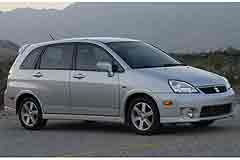 The 2006 Suzuki Aerio SX is a 4-door, 5-passenger wagon, available in 4 trims, ranging from the Base to the Premium AWD.
The Aerios styling is meant to look aerodynamic (thus the name) and distinctive. Its aimed at youthful customers and in the case of the wagon, offers plenty of space to haul their gear around. With an overall height 3 to 4 inches greater than most vehicles in its class, the Aerio boasts a surprising amount of passenger and cargo room at the cost of a chunky profile. Legroom meets or exceeds that of most competitors, and the same is true for cargo space.
Unlike most manufacturers that have a few different engines for their compact, Suzuki offers just one for its Aerio: a 2.3-liter inline four thats good for 155 horsepower. This engine offers more horsepower than most of the cars competition. On the basis of power alone, the Aerio offers impressive performance for a car in its price range. The Aerios suspension uses MacPherson struts all around, but the cars higher-than-average center of gravity results in considerable body roll. Consequently, the Aerio isnt particularly rewarding to drive, though the soft suspension does soak up the bumps without jostling the passengers, making the car a decent choice for commuters.
Driving at highway speeds isnt exactly quiet, but its not unbearable, either. The suspension transmits quite a bit of noise into the cabin and 18-wheelers sound a tad scary when you pass them, but its not bad for a commute. You just wouldnt want to spend 10 hours on the Interstate in this car.
Best of all, even the base models come with a good level of standard equipment, including automatic climate control and a CD player with MP3 capability. Other standard features include power windows, locks and mirrors, keyless entry, a rear spoiler, tilt wheel and outside temperature gauge. Thats a lot for the money.
For people who need good traction in the winter, the Aerio is the cheapest all-wheel-drive car on the market for about $2,000 more than a basic, front-wheel-drive version.
All in all, the Aerio offers a lot of car for the money, but it doesnt have the kind of refinement youd expect from, say, a Honda or Toyota -- or even a Nissan. Whether you buy one should depend on how picky you are and how much youre willing to pay for little things.
Things like decent shocks.
Interior Design and Special Features:
With an overall height 3 to 4 inches greater than most vehicles in its class, the Aerio boasts a surprising amount of passenger and cargo room, and passengers will find it easy to get in and out. Sedans offer a generous 14.6 cubic feet of trunk space; wagons provide 21 cubic feet with the rear seats in use and 63.7 cubic feet when theyre folded. Interior plastics are low in quality compared to the class leaders in the economy car segment. In the past, all Aerios had a hard-to-read digital instrument panel, but Suzuki replaced it with an analog gauge pack last year, while adding a couple of sorely needed storage areas.
Safety:
Side airbags and four-wheel antilock brakes are standard on all Aerios. In crash tests conducted by the NHTSA, the Aerio earned four stars (out of five) for its protection of the driver in frontal impacts, and three stars for front-passenger protection. NHTSA side-impact tests on an Aerio without side airbags returned a perfect five-star rating for the front seat, and four stars for the back. In frontal-offset crash testing conducted by the IIHS, the Aerio earned a "Good" rating, the highest possible. In IIHS side-impact testing, an Aerio with side airbags earned a "Poor" rating, the lowest.
Driving Impressions:
Solid power from the standard four-cylinder engine makes the Aerio impressively peppy for daily commutes; match it with either the automatic or the manual, and you cant lose. The Aerio provides a smooth ride on the highway, but the cost is excessive body roll around corners that is accentuated by the cars tall stance. Opting for the all-wheel-drive system gives the Aerio true all-weather capability.
Pros: Price and gas milage for an ALL WHEEL DRIVE great
Cons: needs more lights like the glove compartment and in rear entrance of hatchback
Alot of standard features for price. Like 6CD changer MP3 anti lock rear windsheild wiper with SX model premiem package. Good value for a cheaper AWD car.
great little car for the money, reliability is unknown. but with 7 years and 100000 miles coverage is a plus.

Sunday, September 8, 2013
2006 Nissan Armada Reviews Specs
 The Armada is a great full size suv more room then chevy and just as big as ford. The ride is better then most full size SUVs the gas milage could be better, but if your towing you dont look at the MPG. The Armada can tow just over 9000 bls which is the highest in its class even the Durango with a Hemi falls short of that mark.
The four wheel drive system is great, you have four different setting to choose, 2WD, AUTO4, 4HI, and 4LO. With the Auto4 and VDC on this baby stays on track and under controll. If I had to buy over again I would be driving the Armada. One bad thing I had brake problems at first but my dealer and Nissan corrected the problem and they did a good job of it too. If you are thinking of this SUV and another one i would lean tword the armada. I drive a 2005 Armada LE 4WD.
News
With demand for big SUVs now generally soft, Armada should get only minor near-term changes. A rumored interior upgrade failed to materialize for 06, but could be on the 07 menu.
New For 2006 Nissan Armada
A more-versatile 3rd-row seat highlights this large SUV for 2006. Armada is based on Nissans Titan pickup truck. It offers SE and LE versions in 2- and 4-wheel drive, and a 4WD SE Off-Road model. The 4WD system can be left engaged on dry pavement and includes low-range gearing. The sole powertrain is a 305-hp V8 and 5-speed automatic transmission. ABS and antiskid system are standard. A load-leveling suspension is optional on SE, standard elsewhere.
SE Off-Road has a special suspension and gains a standard towing package for 06. A power liftgate is standard on LEs, available for SEs; all include opening glass. Curtain side airbags covering all three seating rows are standard. Front side airbags and leather upholstery are available for SE, standard otherwise. LE seats seven and has 2nd-row bucket seats with a removable center console. Optional on LE and standard on the others is a 2nd-row bench for eight-passenger capacity. For 06, a 60/40 split folding 3rd-row bench seat replaces a one-piece type. All rear seats fold into a level load deck. Exclusive to LEs is an optional navigation system with rearview camera. Nissans upscale Infiniti brand sells a retrimmed Armada as the QX56.
Interior
Armadas cabin is attractive, comfortable and convenient. The attractive mix of interior materials gives it a nice look without fake wood-grain trim or excessive use of chrome. The Seton leather available on the Off-Road model is rich and luxurious with texture thats visually appealing.
The eight-way adjustable drivers seat is comfortable and supportive. Adjustable pedals and a tilting steering column help ensure the proper driving position. We found the seats comfortable and liked the commanding view of the road. A two-piece sun visor keeps the sun off the eyes. The gauge package includes speedometer and tachometer, oil pressure, temperature, voltage and fuel gauges. Ordering the towing package adds a transmission temperature gauge.
Places to stash stuff are provided. Opening the lid to the center console reveals a deep storage compartment. In front of that is a large open binnacle, perfect for tossing odds and ends, and an arm swings out to secure a big water bottle. There are narrow storage channels along the sides of the center tunnel and more storage is found in the interior door panels and on top of the dashboard above the outer vents. The center consoles well-designed cup holders are easy to access. Armada offers 14 cup holders and four of them are designed to hold 64-ounce beverage containers. A long, overhead console provides more storage and a pair of map lights. Three 12-volt outlets are provided, including one in the rear, and two of them provide power even when the engine is not running.
The back seats offer acres of space. Passengers in the second row enjoy 42 inches of leg room. Families told Nissan they need more room in the second row than whats available in other full-size SUVs, so the Armada was designed with best-in-class rear legroom. The second-row seats recline so you can really stretch out. A choice of rear seats is available: a bench seat with a flip down armrest or captains chairs with a large center console. Either way, the second-row seat feels roomier than in the Ford Expedition and much roomier than in Tahoe, Yukon, or Sequoia.
Third-row seats are raised, stadium style, for better forward visibility by those sitting back there. The second-row seats easily flip down and tumble out of the way when getting in and out of the third row; the release is a little easier to operate than the Expeditions. Once seated, we found them reasonably comfortable for third-row seats, but they are more suitable for children or short distances.
The Nissan Armada can carry almost as much cargo as a Spanish armada from the heyday of maritime explorers. With all seats in their full upright positions, the Armada provides 20 cubic feet of space behind the third row, which is similar to that of the Expedition. Its deep enough to fit a 30-gallon cooler. Theres also a nice storage area hidden beneath the rear section of the cargo floor. The second- and third-row seats fold flat to the cargo floor. Folding down the third row reveals 57 cubic feet of cargo space, considerably more than whats found in the Expedition.
Folding down both rows provides 97 cubic feet of space, a little less than the Chevy Tahoe and Ford Expedition. Fold down the front passenger seat and you can fit a 10-foot ladder inside. Like the Expedition, there are gaps in the floor between the second- and third-row seats when all are folded flat. Second-row bucket seats come with a center console between them and this setup is not nearly as good as the second-row bench seat when its time to haul cargo or dogs.
Getting in and out is easy in spite of the high step up. The inside door handles are well designed for easy exit. The rear doors open wide. And the running boards help when climbing in or out.
Safety
The Nissan Armada comes standard with four-wheel antilock disc brakes, stability control, rear parking sensors and side curtain airbags that protect all three rows of passengers. A vehicle rollover sensor will deploy the side curtain airbags when it senses an imminent rollover accident. Seat-mounted side airbags for front occupants are optional on the SE and standard on the LE.
Powertrains and Performance
All Armadas come with a 5.6-liter V8 paired with a five-speed automatic transmission. Rated at 305 horsepower and 385 pound-feet of torque, the V8 produces a broad band of power and warrants an impressive 9,100-pound maximum tow rating. SE and LE models are available with two- or four-wheel drive; the SE Off-Road is 4WD only. Four-wheel-drive models use a pushbutton transfer case with dual-range gears.
Body Styles, Trim Levels and Options
The Nissan Armada is available only as a four-door SUV. There are three trim levels: SE, SE Off-Road and LE. Base SEs come well equipped with 18-inch alloy wheels, dual-zone automatic climate control, three rows of seating, a power driver seat, a tire-pressure monitoring system, power-adjustable pedals, rear parking sensors, rear-seat air conditioning, an eight-speaker stereo with an in-dash CD changer and an auto-dimming rearview mirror. The SE Off-Road adds Rancho shocks, a lower final drive ratio, 17-inch wheels and all-terrain tires, foglights and skid plates. The high-line LE model loses the hard-core off-road equipment but gains upscale items like a power liftgate, heated leather seats, driver-seat memory, a power front passenger seat, second-row bucket seats, and an upgraded 10-speaker Bose audio system. Many of these features are optional on SE and SE Off-Road models. A sunroof and rear DVD entertainment system are optional on all trims. A DVD-based navigation system with a rearview monitor is an exclusive LE option.
Driving Impressions
The Nissan Armada offers brilliant throttle response and feels quicker and more responsive than other SUVs in its class. Its 5.6-liter V8 produces a best-in-class 305 horsepower and 385 pound-feet of torque.
The five-speed automatic transmission takes full advantage of the engines strong low-end torque. Having five gears to choose from makes the Armada very responsive and the transmission never hunts around for the right gear. It shifts smoothly and the close ratios eliminate abrupt downshifts. The substantial torque is available even at low rpm, providing confidence-inspiring power when merging into heavy highway traffic with a loaded two-horse box in tow or when maneuvering off road. A 2WD Armada earns a 13/19 mpg City/Highway EPA fuel economy rating, 13/18 for 4WD.
Like the Titan, Nissans brawny full-size pickup, the Armada is built on a fully boxed steel ladder frame that yields a smooth ride and responsive handling. Unlike Titan, Armada features an independent rear suspension, a design that enhances ride and handling. Indeed, the Armada makes a smooth transition as it turns into corners. Its handling feels controlled and handles emergency lane-change maneuvers well at highway speeds. The front suspension is also independent with rack-and-pinion steering.
We found the Armada to be very well mannered, instilling a sense of confidence in the driver that this full-size SUV will go and turn as well if not better than its competition. The brakes dont seem to be fully up to the task of repeated hard braking, however, a consideration when towing through mountainous areas.
The Off-Road package rides much better than we expected after looking at its big, aggressive off-road tires and reading about its Rancho suspension. Out on the highway, it does not ride as well as the standard suspension, however, as road vibration is transmitted on rough freeways. For driving off road, the angle of approach (without the front spoiler) and departure are 31.1 degrees and 27.7 degrees, superior to the Toyota Sequoia and Chevy Tahoe, and the ramp-over angle is 25.0. The 4x2 SE has 9.9 inches of ground clearance while the SE 4x4 and all LEs have at least 10.6 inches of clearance.MSRP Price Range $34,700 - $42,800
Invoice Price Range $31,548 - $38,912
Favorite Features
The DVD entertainment. While the kids can watch, the parents can listen to their own music. NAV- excellent, easy to navigate. Interior design and functionality. Exterior design...it turn heads. I also like the feature, which tells you hown miles left until empty.Helps with your decision to gas up.
Overall Review
this vehicle is no less then any other brand or suv in this market. armada can beat the tahoe,sequoia,expedition,navigator or any suv anytime, anyday. if you want a suv with better torque, towing capacity,more power,amazing acceleration, then this is the car for you!
Friday, September 6, 2013
2006 Chevrolet Cobalt SS Reviews
 I test drove one of these bad boys and I was very impressed. The had a couple of these and the new Civic SI. The Cobalt SS was much more fun to drive!
Engine, mechanics, and electrical stuff is all great. Runs smooth, no rattles, or vibrations at high speeds. Exterior and interior design is great, better than the civic (if you must compare), but the material used inside does not match up with the civic. If you dont mind having plastic panels, its okay. I got the loaded SS w/subwoofer and all, and for a couple thousand more I could of gotten the Civic SI, but the Cobalt just looks better.
If you want a honda get the Civic SI, if its too much money, just get this cobalt SS. Dont waste your money on the Civic DX, LX, or EX.
New for the 2006 Chevrolet Cobalt
Chevrolet revises the 2006 Cobalt lineup, ditching the Base trim in favor of LS, LT sedan, and a new premium LTZ version (sedan only) for the volume models. Also new this year are SS coupes and SS sedans with a 171-horsepower, 2.4-liter four-cylinder engine under the hood, special exterior trim, 17-inch wheels, four-wheel-disc antilock brakes, and performance suspension tuning. The hot SS Supercharged coupe from last year returns for 2006. Majestic Amethyst and Laser Blue are the new colors this years
Interior
Inside the Cobalt, the design theme is simple and straightforward. Materials are decent and the fit and finish is good and comparable for the class. Theres just enough chrome trim here and there on knobs and instruments to brighten things up without a lot of glare from the shiny parts. Instruments are large, well placed, and easy to read, with nice graphic treatment throughout.
Cobalt uses different seats in the different trim levels, each with detail changes in foam, padding and trim. We found plenty of fore/aft and rake adjustment for a 6-foot, 4-inch driver, plus seat height adjustment with a ratcheting handle. The LT seats were very comfortable and grabbed us in the fast corners exactly where we needed to be grabbed and held. Even better were the leather-trimmed seats in the SS Supercharged.
The available Pioneer seven-speaker sound system with the Delphi AM/FM/CD and XM Satellite Radio delivers good sound and includes a huge subwoofer mounted on the left side trunk wall.
The heating, ventilation and defroster system worked quickly and intuitively.
The LS comes with manually operated windows. We dont mind this, but it takes a lot of cranks (about four and half) to wind the windows up. The urethane steering wheel that comes on LS and LT models feels cheap. The leather-wrapped wheels on LTZ and SS models are much nicer.
The sedan trunk is wide and deep with a low liftover height, and almost 14 cubic feet of capacity, more than competitive in the class, though the opening to the trunk seems relatively small. Cobalt does not use space-eating gooseneck hinges on its decklid, opting instead for simple outside corner hinges and two hydraulic assist struts. The coupe has a very small trunk opening, making it difficult to fit a thick suitcase. A 60/40-split, fold-down rear seat with a trunk pass-through feature adds utility to both sedan and coupe.

Safety
Antilock brakes are optional on LS models, and standard on all other Cobalt models. Full-length side curtain airbags are optional across the board. Each seating position has a three-point seatbelt, and all but LS models can be equipped with OnStar telematics. The 2006 Chevrolet Cobalt is one of the few economy cars to earn an "Acceptable" rating from the IIHS for side-impact protection. The IIHS also named it a "Best Pick" for its frontal-offset crash performance, while the NHTSA gave it four stars for the driver and five for the passenger in frontal-impact tests.
Powertrains and Performance
A 2.2-liter four-cylinder powers LS, LT and LTZ models. With 145 horsepower and 155 pound-feet of torque, the engine makes the Chevrolet Cobalt one of the faster econoboxes out there. The SS features an even more potent 2.4-liter version with 171 hp and 163 lb-ft of torque. The SS Supercharged coupe features a supercharged 2.0-liter four-cylinder good for 205 hp, 200 lb-ft of torque and a 7-second 0-60 time. The standard transmission is a five-speed manual with a four-speed automatic available as an option. The automatic is standard on the LTZ, and not available on the SS Supercharged.
Body Styles, Trim Levels and Options
The Chevrolet Cobalt is available as a two-door coupe or four-door sedan. Coupes come in LS, LT, SS and SS Supercharged trim, while sedans come in LS, LT, LTZ and SS versions. LS models feature a standard CD player, air conditioning, a driver-seat height adjuster, a split-folding rear seat and 15-inch wheels. The LT adds cruise control; power windows, locks and mirrors; keyless entry; upgraded seats; alloy wheels; upgraded interior lighting; and antilock brakes. The LTZ sedan comes with leather seats, a seven-speaker Pioneer sound system, chrome trim and 16-inch alloys. The new-for-06 SS adds a more powerful engine, sport-tuned suspension, unique fascias, 17-inch alloy wheels and a rear spoiler. The SS Supercharged coupe features a supercharged motor, an even firmer suspension, leather seats with color-keyed inserts, a boost gauge and 18-inch alloys.
On the Road
I first sampled the new 2.4, an enlarged version of the 2.2 that powers the regular Cobalt, in the new PT Cruiser-like HHR based on the same platform. In the HHR this engine felt very smooth, especially compared to the rough unit in the Chrysler. But then the HHR does not aspire to be a sport sedan. In sport sedan duty the 2.4 doesnt come across nearly as well. Its buzzy and doesnt readily rev. An eagar to upshift automatic transmission doesnt help matters. Put the two together, and the SS felt only a bit more powerful than the regular Cobalt, and no sportier.
Perhaps the 2.4 works better with the manual. But I wouldnt count on it, as the manual I sampled in a regular sedan last year was nothing special. The shifter in the SS Supercharged coupe has shorter throws and generally feels better, but unfortuntely its not used in the regular SS.
The Cobalts steering is assisted by an electric motor rather than the conventional hydraulic pump. Though this system boosts fuel economy by about 0.7 MPG, I have strongly disliked it in other GM vehicles (ION, Malibu, Equinox, VUE), but as tuned in the SS Supercharged, with higher effort and significantly quicker responses, I didnt much mind it. Sadly, once again the SS is much closer to the regular Cobalt than the SS Supercharged. I had hoped that Chevrolet would simply use the SS Supercharged steering and suspension in the SS, but apparently they felt that tuning somewhere between the two, but closer to the regular car, was more appropriate.
As a result, even in SS form the Cobalt sedan lacks the feeling of nimbleness and agility I expect in a compact. To GMs credit, the Cobalts handling is solid and secure, and the SS suffers even less than the regular car from body lean and understeer in turns. Its just not at all sporty. If you want a "Performance Handling" suspension in the Cobalt, your only option is the SS Supercharged Coupe.
Ride quality is a bright area. The SS feels just a bit firmer than the regular sedan, though the lower profile tires contribute a small amount of busyness over some surfaces. Like the regular sedan, the SS feels very solid and noise levels are very low for a compact.
Summary & Specs
The Chevrolet Cobalt will satisfy the needs of drivers looking for economy of price, economy of operation, and a nice, quiet ride. We think its a handsome, well-equipped car. The standard engine could offer more responsive low-end power, however. The Cobalt LS and LT models are the epitome of driving excitement, however. Theyre not made for that. They deliver four people comfortably, five only in a pinch, on a minimal outlay for fuel and monthly payments. The SS models are fun to drive, particularly the Cobalt SS Supercharged coupe.
Tuesday, September 3, 2013
2006 Mazda MX 5 review
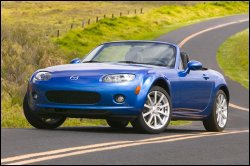 The 2006 Mazda MX-5 is a 2-door, 2-passenger convertible sports car, available in 6 trims, ranging from the Club Spec to the 3rd Generation Limited.
Upon introduction, the Club Spec is equipped with a standard 2.0-liter, I4, 170-horsepower engine that achieves 25-mpg in the city and 30-mpg on the highway. A 5-speed manual transmission with overdrive is standard. The 3rd Generation Limited is equipped with a standard 2.0-liter, I4, 170-horsepower engine that achieves 24-mpg in the city and 30-mpg on the highway. A 6-speed manual transmission with overdrive is standard.
The 2006 Mazda MX-5 is redesigned for 2006.
In the Drivers Seat
The new MX-5 interior has been improved nicely, with completely redesigned seats for better comfort and support, bottle holders in the doors, plenty of storage (even in this small a car), and some trick new features worthy of show and tell. First is the improvement in the roof operation. The top is now a Z-fold design, and has only one latch to lock in place. If you remember the old dual-latch design, we spent more time cursing it because it rarely latched correctly the first time. What a huge improvement. Plus, its a one-handed operation to raise and lower.

When you drop the roof, just push down on the top to lock it into place. No boot needed. Slick. The second cool feature is the Advance Key design that, unlike some of the bulkier keyless start systems, is the size and shape of a credit card, and easily fits in a pocket or purse. As long as the key is in proximity of the vehicle, just grab the ignition switch and turn on the MX-5. The shift knob remains compact and fits perfectly in the palm of your hand. This is one of those areas that Mazda designers attribute to their Kansei approach, where its about how the car feels in your hands... its a more emotional than strictly cold engineering level at which this car plays.
On the Road
What we love—and have always loved—about this car is its perfect balance. Another concept followed by the MX-5 Miatas creators is Jinba Ittai, which translates as: the rider and horse as one. Thats exactly how the new MX-5 feels. On the road it becomes an extension of the driver. You feel like a fighter pilot wearing a high-tech helmet that points the jet where you look. Its perfectly set up to take any corner without drama, no matter what the speed, and the shifts on the standard 5-speed manual are smooth, with direct, precise and short throws that never require more than a flick of your wrist to execute.
(Two other transmissions are available: a 6-speed manual and a 6-speed automatic with paddle shifters.)
The 2.0-liter engine now makes 170 hp and 140 lb-ft of torque, both up from the second-generation version. These numbers wont peel asphalt, but that was never the intention of the Mazda engineers. Its more about creating that perfect balance of the driver and the car. Frankly, for those of us who are true enthusiasts, this kind of driving is more enjoyable than screaming down the highway in a sedan with obscene performance specs that work great in a straight line but make your hair change color in the turns.
Sport vs Touring
Pros: great blend of comfort, milage and performence! ride not as brutal as sport. paddle shift a blast.
Cons: hard to keep under 90mph. why 4 cup holders???
If youre looking for a roadser that works as a every day car and tears up the twisting roads, this model is the one! the six speed auto/manual paddle shifter will make you forget all about a stick shift. Leave it in auto and let it do the work, (it down shifts too!) or choose manual and tear it up with the paddles, floor shift or combination of both simultainiously.
The great ride lets you explore the side roads all day without punishing your kidneys like the sport I test drove can. bottom line? if you want to stomp everyone at the autocross on the weekend, buy the club or sport model and park it during the week. If youre looking for simular performance in a great touring package you can drive all week, get a touring and get it all! Oh, did I mention the great break on insurance you get with an (automatic) sports car?
Thursday, August 29, 2013
2006 Mitsubishi Lancer Evolution review

If your looking at the Evo you obviously know what this car is about. Throw you back in your seat acceleration, insane cornering grip, and brakes that would have stoped the titanic. All this for a little over $30,000 and you have a car that will compete with cars costing hundreds of thousands more.
If your buying this car your looking for the thrill of driving. Not a spectacular interior but build quality is outstanding. The list of standard features is respectable with everything you would expect from a car in this price range.
The ride is a bit choppy on my small town Wisconsin roads but it does nothing to take away from the pleasure of driving this awsome machine. Be warned though. Everyone wants a ride in it and everyone wants to see what its got. This can get you in trouble. Believe me. In my opinion you cant find a better new car for the price. Excellent!
THE 2006 Mitsubishi Lancer Evolution MR is the fastest ugly car in the world. I mean that in the nicest possible way.
After all, making ugly fast is no small feat. Fast cars are typically low-slung, wide and rakish, aerodynamically optimized in the wind tunnel for high speeds and stability. Our innate sense of aesthetics responds to this kind of sleek-ifying in the same way we recognize a cheetah, a porpoise or a peregrine falcon as beautiful.
The stubby and thick Evo MR, on the other hand, is more like a rocket-powered groundhog, or a baby hippo fired out of a cannon. Fast. Ugly.
As appropriate for the name, it has taken many years of selective genetics to bring the Evo MR to its current fast/ugly nexus. The Evo line began in 1992 when Mitsubishi started building amped-up versions of its geeky Lancer sedan to compete in World Rally Championship racing.
In the next decade, while Evos tore up the WRC circuit, the ever-more-powerful street versions became the golden idols of performance pagans everywhere - everywhere, that is, except the U.S., where emissions standards made importation too expensive. This left thousands of young American men grieving in their parents basements, as the car was a star in video games such as "Gran Turismo" and "Need for Speed."
Inside and Out
Heres where it does hurt: no radio. No speakers. No power windows, no power door locks, no power mirrors, no keyless entry, no center console, no map lights. No sound deadening in the body, no carpeting in the trunk, no wiper in the rear, no paint on the naked door handles or mirrors. Amazing what we take for granted until its gone. Cant live without these life sustaining necessities? Then stay away from this track-ready Evolution RS - something that all but about 200 of Mitsubishis customers did last year. Honda sells that many Accords in two hours. On a slow day.
Since those voids can be easily filled with a step up the Evo ladder, lets focus on whats common to all Evos, most of which is common to all Lancers. Its just your basic retro-90s Japanese economy car interior: plain but perfectly functional. The few controls work exactly as expected, with a quality feel that belies their cheap appearance and new cupholders for this year. If it pleases your eye, you should have nothing to complain about. Especially if you like black.
Unique to Evos are the enveloping Recaro seats, which add side bolsters that aggressively hold you in place while maintaining the high comfort levels of the standard Lancer. There should be enough room and adjustability in them for drivers of all heights, though fatties might not fit within the narrow width. Also, those Recaro guys copied one of Volkswagens wrong answers by placing the angle adjuster on one of those frustrating knobs that must be turned ten thousand times to recline the seat one degree. And in some conspiracy against ergonomics, the knob has a freakin annoying triangular shape and is nearly impossible to reach with all that bolstering in the way. In a two-driver household, this car could inspire divorce.
Some more Evo exclusives are the Momo steering wheel (nothing wrong with this piece) and the sportier red gauges, in which the tachometer stands front and center. And of course, no other Lancer has the switch to toggle between Tarmac, Gravel, and Snow settings on the Active Center Differential.
The back seat is standard Lancer fare - adequate for two adults, possibly tolerable for three. Good legroom and footroom, but seat cushion too low, short, and soggy. The built-in head restraints are pretty flimsy, too, and there are no side air bags in any position. A mix of average-feeling leather and nice-feeling Alcantara (suede?) covers all surfaces.
The back seat doesnt fold down into the trunk like on other Lancers, no doubt to keep the car as stiff as possible. But the trunk is fairly roomy, even if, on this RS model, it looks like a looter made off in the night with the contents.
On the outside, the Evo MR looks like it went into a performance parts store and got dressed in the dark. New for this model is the inch-deep chin spoiler under the front air dam and the oval ports letting air flow around the intercoolers inlet and outlet pipes. In addition to the aluminum fender panels bulging like a can of bad Spam, the car sports a carbon-fiber rear spoiler complete with a small vertical "wickerbill" on the trailing edge. Most curious, though, is the "Vortex Generator," a row of small fins on the roof that create turbulence in the airstream over the spoiler, for an extra soupçon of downforce. Some guys have a comb-over. This car has an over-comb.
performance
The driver inputs are all perfection. The six-speed gearbox (with Teflon-coated cable linkage) is slick and affirmative. The close-set pedal position makes heel-and-toe driving effortless - and theres nothing quite like downshifting and blipping the throttle in the Evo. Frank Sinatra should have such ring-a-ding-ding. And, it will surprise no one, the steering is phenomenal. This car has one of the quickest steering ratios this side of Laguna Seca providing powerful sweeps of angular momentum with slightest inputs off center. And yet, on the freeway, the car tracks like an arrow.
This race-like responsiveness does have its downside. The rack ratio combined with the front wheels AWD linkage gives this car a truly ridiculous turning radius. Escalades are easier to park.
Of all the Evos phenomenal statistics, Im pole axed by this one in particular: Mitsubishi warranties the powertrain of this shrieking-sucking torque pig for 10 years or 100,000 miles. Holy groundhog. The car may be ugly, but that warranty is a beautiful thing.
2006 Mitsubishi Lancer Evolution MR
Base price: $36,299
Price, as tested: $36,894
Powertrain: Turbocharged and intercooled iron-block inline four, 16-valve DOHC, with variable-valve timing and dual-stage exhaust; six-speed manual transmission; full-time all-wheel-drive with active center differential; front and rear limited-slip differentials
Horsepower: 286 at 6,500 rpm
Torque: 289 pound-feet at 3,500 rpm
Curb weight: 3,285 pounds
0-60 mph: 4.5 seconds (est.)
Wheelbase: 103.3 inches
Overall length: 178.5 inches
EPA fuel economy: 18 mpg city, 24 mpg highway
Final thoughts: Revenge of the nerd
Need 4 Speed?Get u some EVO
Pros: Turbocharged goodness, 4wd, Recaro seats, smooth shifting 6-speed, awesome brakes
Cons: The speed limit, I cant drive it 24 hours a day
This car is, without a doubt, the best performing car under 35k you can buy. 0-60 in 4.5 seconds, braking from 60 in ~115 ft, and awd traction so ferocious, itll put a grin on your face everytime you take a high speed corner. Seriously folks, do yourself a favor and go test drive one (if the dealer will let you). Once the turbocharger kicks in at around 3200 RPM, youll be shoved back into your seat and before you know it, youre 2x over the speed limit. Make no mistake about it, this car isnt for the weak. Its not made for luxury or people who dont find passion in driving. This car is made for thrills and every drive in it is definately exciting. So if you want all that GPS, dual climate control, messaging seats junk, go buy yourself a Lexus. The Evo is made for hardcore motoring only.
Peace easy
Tuesday, August 27, 2013
2006 Scion tC Reviews Specs
 My nephew bought this car, a dark silver color with a 5-speed, although I do drive it whenever I choose. He used to own a 04 Honda Civic si, there is no comparison. The Scion is a hands-down winner in the contest. The Scion has so much more midrange torque, and upper end horsepower, that driving this car sportily is very easy.
The Honda Civic si had to be literally beaten to be made to do the same thing the Scion does in its relaxed mode. Also, the Scions quality of fit and finish both interior and exterior blow the Honda away. I dont know why these young people even waste their time buying a Honda or Acura when these Toyota products are so "top of the line". My nephew says its because of that movie "The Fast and Furious"...this made me laugh...the ignorance of youth?
News
We hear the tC could be dropped by mid-2008 in deference to the ever-changing tastes of Scions young, trendsetting target buyers. One rumored replacement would deck out parent Toyotas Matrix compact wagon with "rally car" styling and perhaps a hot engine and all-wheel drive to go with it. Still, this so-called "xR" is just one of many possibilities that Toyota could brew from its many worldwide platforms and powertrains. Meantime, the tC shouldnt change much except for trim packages and maybe a few new functional features.
New for 2006
Introduced for the 2005 model year, the 2006 Scion tC gains audio system upgrades including a new three-spoke steering wheel with integrated audio controls and a new standard Pioneer audio system. New exterior colors are Classic Silver Metallic and Nautical Blue Metallic. A Pioneer AM/FM/CD head unit with iPod control is now available as an all-new accessory upgrade for all 2006 Scions. This head unit integrates track, artist and album information from the iPod into a one-line display on the head units screen.
Interior Design and Special Features
Although the Scion tC is a compact car at just 174 inches long, a relatively long (106.3-inch) wheelbase provides more than ample legroom, especially for those riding in the back. Rear passengers will also enjoy the split seat backs that can individually recline up to 45 degrees. Although it looks like a coupe, the tC is actually a hatchback, which means flexible cargo capacity. By folding down the rear seats as well as the right front seat, a load floor that stretches 103.6 inches is created, ideal for snowboarders and surfers. Cargo capacity is 12.8 cubic feet with the rear seats in use and a whopping 60 cubic feet when theyre folded down.
Safety
The Scion tC comes with four-wheel antilock disc brakes (with Electronic Brakeforce Distribution) as standard equipment. Side airbags for front occupants and full-length head curtain airbags are optional. Other standard safety features include a first aid kit, triple side door beams and a driver knee airbag.
Powertrains and Performance
Standard power for the Scion tC comes from a 2.4-liter inline four-cylinder borrowed from the Camry, with 160 hp and 163 lb-ft of torque. A smooth-shifting five-speed manual gearbox is standard, with a four-speed automatic available as an option. Fuel economy is average for a budget coupe with a 22 mpg city/29 mpg highway estimate for the manual, and 23 city/30 highway for the optional automatic.
Body Styles, Trim Levels and Options
The Scion tC comes in one trim level and is chock-full of unexpected goodies such as one-touch up-and-down power windows, cruise control, air conditioning, steering wheel audio controls, keyless entry, mirror-mounted turn signal lights, four-wheel antilock disc brakes and a 160-watt Pioneer sound system with CD player and remote mini-jack port that is (XM) satellite radio-ready. The only factory option is a side airbag package, but there is a multitude of dealer-installed options. This list includes a CD changer, satellite radio, a subwoofer and a lighting kit for the footwell, just to name a few. A unique iPod connectivity upgrade is also available, and allows full iPod control, including power and display, through the tCs audio system.
Driving Impressions
The Scion tC is fun to drive. The engine is quiet, smooth, and plenty powerful in a 2900-pound car, and at full throttle, it sounds powerful without being intrusive, because it has a valved muffler that opens up at high rpm and can be worth as much as 5 horsepower.
The 2.4-liter double overhead cam, 16-valve engine is tuned to 160 horsepower and 163 pound-feet of torque. This engine has been around Toyota in one form or another for many years and it has been continuously improved for power, torque, quietness and reliability. It comes with electronic variable valve timing for good low end torque development, and twin balance shafts for smoothness.
Choosing between the five-speed manual and four-speed automatic involves tradeoffs. The automatic is easier and, remarkably, more efficient, while the manual offers quicker acceleration performance. The gearing in the four-speed automatic means its not the hot setup for drag racing, with an overall ratio of just over 10:1. The five-speed manual is nearly 15:1, delivering much quicker acceleration in first gear. However, the automatic does move out smartly. And its obviously much easier to live with in the stop-and-go and slow-and-go, eliminating the need to exercise your left leg on the clutch pedal. Unlike most cars, the tC gets slightly better highway mileage with the automatic because the manual has a lower 4.235 axle ratio.
The steering, ride quality and overall handling of the Scion tC are commendable. Ride quality and stability are enhanced by its 106-inch wheelbase, longest in the class. It steers with a hefty touch, but accurate pointing, and transitions are easy and without drama. Thats because the tC has a low-cost MacPherson strut front suspension coupled with an expensive independent double-wishbone rear suspension not found on many cars in this price class. Bridgestone Potenza tires are standard.
The brakes are quite powerful for a car this light. The pedal feel and travel is very much to our liking, with almost no dead space at the top of the pedal travel. The ventilated front and solid rear discs are generously sized (10.8 inches front, 10.6 inches rear) and, as mentioned, ABS and EBD come standard. ABS allows the driver to brake and steer in a panic braking situation; EBD automatically balances braking forces front to rear, improving stability under hard braking and helping reduce stopping distances.
Favorite Features
My favorite features would be the price, rims, sound system, sunroof, metallic paint, Scion VIP security, high quality, and the look of the car from the outside and on the inside (not just high quality looking but actually high quality).
Overall Review
If you dont NEED a four door vehicle, and you want something fun to drive, this is it! Its an amazing value for all the standard options, and also has Toyota reliability. If you are in the market for a sporty, reasonably priced new car, I would HIGHLY recommend this one!
MSRP Price $16,300
Invoice Price $15,485
Saturday, August 24, 2013
2006 Cadillac BLS Review
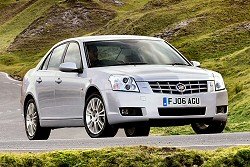 Trying to spread its newfound success to Europe, Cadillac is debuting in Geneva its latest effort, the BLS. Based on the Epsilon platform that underpins the Saab 9-3 and Chevy Malibu, the Cadillac BLS is a compact four-door sport sedan that takes aim at cars like the Audi A4.
The BLS will only be available in eco-conscience Europe, and the engine lineup reflects that. A turbo-diesel will power a Cadillac for the first time; the 1.9-liter unit joins three gasoline offerings. The design of the car is uniquely Cadillac, and certainly unlike anything currently on European roads.
It shares the same upright grille and headlights as the other neo-Cadillacs, and from the back it looks very similar to the new STS. But we think GM could have done a better job masking the steering wheel--it appears to have been ripped from a Saab 9-3 intact and disguised only with a feeble Cadillac sticker in the center.
The exterior styling is distinctive with a wedge-shaped profile and a look that isnt going to be confused with any other marque on the road. The huge vertically-stacked headlights and tail lights are interesting design touches and there are V-shaped motifs within the grille and the number plate surrounds. The crease along the cars hipline looks sharp enough to slice prime rib and the interior is certainly a cut above the usual American fare. Theres often a disappointing sensation of getting into a cheap hire car at LAX whenever we sit in an American import but the BLS offers a clean if not adventurously styled fascia.
Three trim levels will be available across the BLS range. The standard trim level, SE, offers 16-inch alloy wheels, engine immobiliser, front, side and curtain airbags, driver trip computer, three-spoke leather steering wheel with audio control buttons, cruise control, air conditioning, front and rear electric windows, a seven-speaker audio system with CD player, and Piano Black interior decor trim. The intermediate trim level, Luxury, features additional standard equipment including Cadillacs StabiliTrak electronic stability programme, wipers with rain sensors, an eight-way electrically adjustable drivers seat, dual-zone climate control and 17-inch alloy wheels. Red walnut wood veneer trim enhances the interior decor.
The top of the range Sport Luxury trim level additionally offers 18-inch alloy wheels, sports suspension, xenon headlamps, and heated, electrically adjustable leather front seats with memory function. The Sports Luxury package will initially only be offered with the 255bhp 2.8-litre V6 petrol engine. Perhaps Cadillac could have done a little more with the steering wheel that looks a little too much like a hastily rebranded Saab item.
"The Cadillac BLS offers distinctive styling, sensible running costs and a genuine alternative to the usual suspects"
The engineering underneath the car is tried and tested GM fare. That means that youll get a front wheel drive chassis with a choice of either a 175bhp 2.0-litre four-cylinder turbo model or a 2.8-litre V6 turbo that punches out a hefty 255bhp.
Theres even a 1.9-litre direct injection turbodiesel engine thats good for 150bhp, a first for Cadillac. Itll notch off the sprint to 60mph in just 9.3 seconds but the in-gear acceleration times that really indicate a diesel engines torque response have been slashed dramatically.
The 1.9-litre TiDs powertrain includes the most advanced diesel particulate filter on the market, enabling Euro IV emissions compliance - an essential requirement for many company car drivers. Unlike other particulate traps, it is maintenance-free and self-cleaning, requiring no additives or periodic replacement. In order to clean the filter and to keep the exhaust flow as free as possible, these deposits are periodically burnt off by short pulses of over-fuelling.
These briefly raise exhaust temperatures to the required level of 600º C. The process is automatically initiated when back pressure in the exhaust system reaches a certain level and is completely undetectable by the driver. The self-cleaning process takes place whenever necessary, irrespective of throttle load or engine temperature. Pricing looks sharp with the entry-level 2.
0-litre just slipping below the £21,000 barrier at £20,728, while the 1.9-litre turbodiesel opens at £21,473. Opt for the range-topping 2.8 V6 model and youll need to find £30,998.
Vehicle type: front-engine, front-wheel-drive, 5-passenger, 4-door sedan
Price (U.K.): $34,870
Engines: turbocharged and intercooled DOHC 16-valve 1.9-liter diesel inline-4, 150 hp, 236 lb-ft; DOHC 16-valve 2.0-liter inline-4, 175–210 hp, 195–221 lb-ft; turbocharged and intercooled DOHC 24-valve 2.8-liter V-6, 255 hp, 258 lb-ft
Transmissions: 5- or 6-speed automatic with manumatic shifting, 5- or 6-speed manual
Wheelbase: 105.3 in
Length/width/height: 184.3/69.0/57.9 in
Curb weight: 3200–3600 lb
Friday, August 23, 2013
2006 Citroën C Métisse Concept Preview
 CITROËN - Citroën’s C-Métisse concept is out to prove that an exceptionally stylish fast mover can also be “green” – with a top speed of 155 mph and the economy of a small, low-powered hatch. The super-low, four-seater coupe has four upward opening scissor doors, an amazing leather and aluminum-trimmed “aircraft-style” cockpit, and bucketful of technology.
That includes a hybrid powertrain combining a 208 bhp V6 turbodiesel powering the front wheels with two electric motors to drive the rear ones. With sophisticated control systems it will go into electric-only “silent-running” mode in town, but they also say it’s a real drivers car, with 0-62 mph in 6.2 seconds with engine and motors working together.
Hot. Hot. Hot. Thats the only way to describe this four-door, four-seat grand touring coupe concept. Fifteen-and-a-half feet long and barely four feet high, the C-Métisse is certainly visually striking--and thats before you open the four scissor doors. (Yeah, we said its a coupe, but half the "coupes" coming out these days have two sets of doors.) The rest of the exterior is highlighted by adaptive LED headlamps, an aggressive and angular front fascia, and flared wheel arches.
A high-spec passenger compartment
Upholstered in white leather, the space reserved for the three passengers features an uncluttered design that creates an atmosphere of total relaxation.
Through their design, the three independent seats suggest comfort and lightness. This impression is reinforced by the airy shapes and hollowed volumes of the cabin, in which the leather trim and aluminium inserts clearly confirm C-Métisse as belonging to the world of exceptional cars.
For truly exceptional passenger comfort, each seat has independent air conditioning controls – stamped into the leather door panels – along with individual roof lighting. C-Métisse makes full use of its generous wheel base (3 m). The space provided for rear passengers is exceptional for this type of vehicle. Knee room, in particular, corresponds to limousine standards.
Spectacular door design and easy access
C-Métisse implements a number of astonishing technical solutions, particularly in terms of door design.
The first surprise is the presence of rear doors on a vehicle that is nevertheless the embodiment of a well designed coupé. The second lies in the ballet that takes place when the doors open, extending an impressive welcome to passengers: the front doors open gull-wing style while the rear doors spin round.
Looking beyond the stunning visual effect, this is actually an efficient solution for easy access. The doors rise up slightly on the roof – a major obstacle when getting into extremely low vehicles – to provide outstanding accessibility. The parallelogram boot opening also contributes to the overall looks of the car.
A coupé of elegant design
Looking at C-Métisse is a visual shock in itself. Long (4.74 m), wide (2 m) and low (1.24 m), the car is sculptural and almost intimidating. It demands immediate respect. However, far from creating a sense of distance between the onlooker and the car, this respect is mingled with an irresistible appeal, an absolute attraction. Whether were looking at the rear wheel arches, the bonnet or even the boot, an astonishing sensuality is reflected in the cars curving, sleekly muscled volumes. The seduction of C-Métisse is also expressed through a sense of latent power. Even when stationary, the body suggests movement. With its very long bonnet and virtually inexistent rear overhang, C-Métisse brings to mind the design balance of vehicles seen during the golden age of Grand Touring.
The design lines of C-Métisse also reflect the quest for outstanding aerodynamics, delivering improved fuel economy and lower pollutant emissions while also integrating the latest technological developments. Positioned either side of the double chevron badge on the radiator grille, the headlamps are equipped with a row of LEDs that light up progressively, depending on the steering-wheel angle and vehicle speed. This feature ensures excellent lighting when driving on winding roads by night. At the same time, the Michelin tyres with their central wheel nuts contribute to the sporting character of the coupé. More specifically, the development of these tyres was integrated with the vehicle design process, in order to optimise resistance to air and thus contribute to the vehicles excellent drag coefficient (Cd of 0.30).
News
Paris Preview: Citroëns C-Métisse Concept
PARIS — Citroën may claim that its new C-Métisse sports car proves performance can be green. But at the Paris Motor Show, the green may come from the envy of competitors who watch the crowd-drawing ability of this gullwing concept.
With a drag coefficient of just 0.30, the C-Métisse is as sleek as it is sexy. It also looks menacing and edgy — a nice combination. Its biggest virtue, though, is a fuel consumption rate of 45 mpg, achieved courtesy of an HDi V6 diesel engine and two separate electric motors on the rear wheels, capable of developing 295 pound-feet of additional torque. Around town, the concept car can run in Zero Emissions Vehicle (ZEV) mode.
The C-Métisse is only 48.8 inches tall, but at 186.6 inches, it is also quite long. Inside the "aircraft-style cockpit," passengers are pampered by individual white leather seats. Other luxury touches include leather trim, aluminum inserts and independent air-conditioning for each passenger.
Saturday, August 17, 2013
Prices Review 2006 Toyota 4Runner
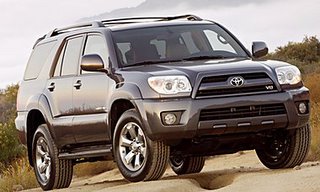 The Toyota 4Runner has become increasingly marginal in the competitive midsize sport-utility vehicle market for the past few years, but the significantly redesigned version brings this Toyota up to speed again.
The 4Runner has a familiar name, having been introduced in 1985 with sales of more than 1.2 million units. But the 2002 version was saddled with a 6-year-old design that had to compete with a large number of new sport-utes unveiled in the past few years.
Redesigned and re-engineered for the 2003 model year, Toyotas long-running 4Runner is still a capable off-road sport utility vehicle with rugged body-on-frame construction.
This new fourth-generation 4Runner is bigger than its predecessor, offers a first-ever V8, adds a number of new features including electronic control for steep downhill descents off road and optional curtain and side airbags and provides an improved, bit of refined ride.
Minor trim and feature changes mark 2006 for Toyotas truck-type midsize SUV. 4Runner comes in SR5, Sport Edition, and Limited trim, each with specific styling touches. All offer a V6 or V8 with a 5-speed automatic transmission and standard rear-wheel drive. The V8 can be ordered with all-wheel drive, the V6 with 4WD that can be used on dry pavement. Both systems have low-range gearing and include hill descent control designed to limit speed down steep slopes. Hill ascent control--to avoid sliding backward--is standard linewide.
Pricing is changed, too. While the starting manufacturers suggested retail price is around $27,000 now, a 4Runner with new V8, four-wheel drive and a host of options can actually carry a lofty price tag of more than $42,000.
This is a far cry from the pricing and amenities offered on the truck-ish, rather barebones SUV that the 4Runner started out as in the mid to late 1980s.
Two new engines, old 4-cylinder dropped
The 4Runner now is available with 6- and 8-cylinder engines. The 4Runners 4-cylinder power plant from last year is gone.
The 2003 base engine is a new, 4.0-liter V6 capable of 245 horsepower and 282 lb-ft of torque at 5200 rpm.
Power here is pleasant and not overly brutish, even if torque is not strong enough to snap your head back.
Both performance numbers top those of the Nissan Pathfinders V6 and the inline 6 in the Jeep Grand Cherokee. In fact, the 4Runner V6s 245 horses even top the 235 horsepower provided in the vehicles up-level V8.
The pulling power, or torque, is highest with the 4.7-liter, double overhead cam, i-Force V8. Its a full 320 lb-ft at 3400 rpm.
This compares with 326 lb-ft at 3600 rpm in the Grand Cherokees High-Output V8.
In the test 4Runner with V8, the vehicle felt like it had plentiful power, no matter if I was climbing hills off road or passing vehicles on the highway.
I needed to only depress the accelerator pedal slightly and the power would come on. If I slammed down hard on the accelerator at startup, there was strong power that pushed my head back against the head restraint.
Shifts were smooth from the 5-speed automatic, which is a first 5-gear automatic in a Toyota truck. The 4Runner V6 comes with a 4-speed automatic, though.
For both engines, Toyota recommends 91-octane gasoline.
Note the towing capacity for the 4Runner remains at 5,000 pounds, the same as last years model.
Safety Features
Safety features include an option that has front side airbags working with front and rear curtain-shield airbags.
The 4Runner has a generally smooth ride, but it isnt as smooth as rides from car-based sport-utility vehicles—or those with an independent rear suspension.
The variable-assist power rack-and-pinion steering is suitably fast. Standard anti-lock brakes are easily modulated despite a rather soft pedal and have brake assist and electronic brake-force-distribution features.
Extra effort is needed to get in and out of the tall 4Runner, and its narrow running boards are more of a hindrance than a help for those with large shoes. At least the windshield posts have large grab handles to assist entry and exit—especially for elderly folks.
Lots of Driver Assists
The 4Runner is loaded with driver assists. One is its Hill-start Assist Control system, which should be especially appreciated by those living in hilly areas. The system comes on all 2- and 4-wheel-drive versions and is a "first" for a sport ute.
By controlling the brakes, Hill-start increases stability for improved control on steep upgrades and stopping and starting on slippery surfaces. It helps prevent the 4Runner from rolling backward or slipping sideways during transition from a stopped position to climbing an upgrade.
Electronic traction control and anti-skid systems also are standard.
"The best vehicle I have owned!"

Pros:
A very well put together and thought out SUV. V8 Power is excellent. The new rims, exclusive to the Limited, are very sharp. Fit and finish are outstanding. Input for your Ipod now standard. Extra power outlets to handle everything from a radar detector to a laptop.
Cons:
A few very minor details. The power window and lock buttons are in a strange place.
Overall Review:
The 4Runner has everything that you want in an SUV. Good power and above average fuel economy for a medium to large SUV define the 4Runner. Interior styling is modern and pleasing. The seats hug your body and make for a comfortable ride. The suspension gives you the feel of a luxury sedan. Good on or off road with the 4x4 option. This is no Explorer or Envoy. This is far beyond anything that they offer.
Overall, this is a great SUV. Its luxurious, powerful, and isnt the typical soccer mommy SUV. We purchased this vehicle as a kid hauler, towing vehicle, and light off road machine. It does all of very well. I highly recommend! Cheers.
Tuesday, August 13, 2013
2006 Lincoln Town Car Reviews
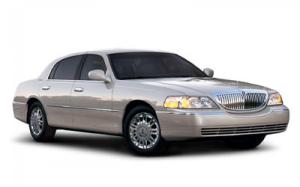 This 2003 review is representative of model years 2003 to 2006.
Below is a full, detailed 2006 Lincoln Town Car review and road test from new car Test Drive. A full evaluation of price, equipment, the driving experience, and specs are all here in a structured, easy-to-navigate format from journalists with limitless experience.
The big 2003 Lincoln Town Car is reminiscent of grand 1930s luxury cars such as the large Duesenbergs, Packards, Cadillacs and Lincolns.
Such rear-drive cars were breathtaking, especially if they had custom bodies. Even today, a 1936 Packard Twelve with a custom body by Fernandez & Darrin of Paris can stop people in their tracks.
However, Duesenbergs and Packards are long gone, and General Motors and DaimlerChrysler have abandoned the V8, rear-drive luxury sedan market—at least temporarily.
That makes the Lincoln Town Car really stand out. It has some of the visual impact of the top 1930s luxury cars because of its slick styling and large size. In fact, its the only big rear-drive V8 American luxury yacht left.
The latest version of the Town Car has gone on sale this summer as a strategically improved early 2003 model, with base prices ranging from $40,270 to $50,700.
Big car with big trunk
"Town Car customers can buy whatever they please, and their priorities are room, ride, comfort and safety," said Rick Brisson, Town Car brand manager. Indeed, the more than 17.5-foot-long Town Car is all about room. It already had the largest trunk in its class— perfect for suitcases and golf bags of all sizes. You dont have to organize them or sort them; they seem to fit back there without fuss.
Now, access to the Town Cars 21-cubic-foot trunk is improved, thanks to a wider trunk opening in the 2003 and the fact the mini-spare tire that used to intrude from a back shelf in the trunk is repositioned.
Inside, the Town Cars 45.8 inches of legroom in the front seat and minimum 41.1 inches in the back seat— 46.96 inches in the Town Car long-wheelbase trims— are noteworthy. In contrast, the Cadillac DeVille has 42.4 inches of front legroom and 43.2 inches in the back, according to Cadillac.
Likewise, the Town Cars front-seat hip room of 57.3 inches surpasses that of the DeVille and Lexus LS 430.
Limo-Style Rear Room
Most of the extra space of the longer-wheelbase trims is devoted to more rear-seat room. In fact, the long-wheelbase trims have more back seat legroom than any regular production car. However, the standard-length Town Car has plenty of rear-seat room.
One might think that the big, heavy Town Car would be clumsy, but the 2002 model was generally good in that regard and the 2003 model is significantly better.
Same engine, more power
The 2003 Town Car has the 4.6-liter, single overhead cam V8 that was in the predecessor.
But it makes more power now — 239 horsepower vs. 220 in the 2002 Town Car. Torque is up 22 lb-ft to 287 at 4100 rpm.
Its more than adequate to get the new Town Car up and moving quickly. I launched out of a parking lot and into traffic, yet easily managed to keep ahead of the oncoming cars, for example.
Shifts from the four-speed automatic transmission are smooth most of the time. There was a sharp jerk when the accelerator was depressed hard for a bit, as if the driver wanted quick acceleration, then released suddenly.
But despite the increased engine power, I didnt hear a lot of engine noise while inside the Town Car. The exception was when I had the pedal to the metal. Then, the deep sounds of a V8 at work would come through. Theyre newly tuned for a more pleasant sound this year, too. Fuel economy isnt bad for a car this big that can carry up to six passengers. The 2003 Town Car, which comes with a four-speed automatic transmission, is rated at 17 miles a gallon in the city and 25 mpg on the highway.
Improved Steering
The stiffer frame helps handling. So does the new rack-and-pinion steering, which replaces the older models less precise recirculating ball steering gear. Steering effort is low at parking speeds and rises progressively as speed goes up.
The front suspension has a more robust design with such items as upgraded shock absorbers to improve handling.
A revised rear suspension also allows better handling and reduces transmission of road impacts into the cars structure. That suspension has a stabilizer bar, and load-leveling air springs maintain a constant ride height, regardless of vehicle load.
There is a more powerful 4-wheel anti-lock brake system with a new booster that provides a "panic assist" during fast stops.

Pros:
A return to more formal styling
Suspension improvements bring better handling
Oh-so-roomy back seat, especially in L trims
Cons:
Still some floaty sensations
No head restraint for middle person in back
Some features not offered
Thursday, August 8, 2013
2006 Chevrolet TrailBlazer
 TrailBlazer comes standard with a superbly smooth and modern Vortec 4200 inline six-cylinder engine, which has been upgraded for 2006, and its our first choice unless towing is a big part of the picture. The Vortec 5400 V8, with its Displacement on Demand technology promising improved fuel economy is available as an option on all 2006 TrailBlazer models. Equipped with the V8, a 2WD TrailBlazer EXT can tow up to 7,000 pounds.
The 2006 Chevrolet TrailBlazer adds the SS powered by a 395-horsepower LS2 6.0-liter V8 engine with 20-inch wheels, sport-tuned suspension, unique exterior styling, specific interior appointments and available with all-wheel drive. StabiliTrak is standard on all TrailBlazer trims levels and the LT receives new front and rear fascias, grille, headlights, rocker panels and side moldings.
The cosmetic changes include revised front and rear styling, and horsepower of the standard 4.2-liter inline 6-cylinder engine jumps to 291 from 275 for the previous model.
An optional 5.3-liter V8 with 300 horsepower has General Motors Active Fuel Management system, which shuts down four cylinders to save fuel under low-effort conditions such as steady cruising.
An enhanced Quiet Package with an acoustic laminated windshield and additional sound insulation adds to the TrailBlazers refinement.
Walkaround
TrailBlazers styling helped blaze the trail for the latest Chevy Truck design. Its an aggressive look with bold headlamps and a split grille. The horizontal bar that splits the grille, headlamps and turn signals is chromed on the LS, body-colored on the LT, and black on the SS. The front bumper features a large opening with two vertical slats, and the optional foglights are mounted down low. The front end of the TrailBlazer makes it look like a scaled-down Suburban or Silverado.
Overall, TrailBlazer looks neat and sturdy, with confident lines that express utility. The pillars and window lines are graceful, while the big fender flares are visually bold. At the rear is a convenient step in the center of the bumper.
The seven-seat TrailBlazer EXT is 16 inches longer between the front and rear wheels than the standard five-seat TrailBlazer and looks disproportionately long and narrow. The easiest way to tell the TrailBlazer from the TrailBlazer EXT is to look at the rear passenger doors; theyre full-size doors on the EXT but the rear wheel wells cut into them on the standard-length model.
For 2006, the antennas for the optional OnStar assistance system and XM Satellite Radio are combined in a single unit.
Safety Features
Standard safety features include an anti-skid system and roll-stability control. Optional are head-protecting side-curtain airbags for the first and second seating rows.
Many TrailBlazers are bought by traditional American truck owners who dont quite understand the TrailBlazers BMW-style inline 6-cylinder and thus opt for its 5.3-liter 300-horsepower V8, which offers more torque for such jobs as heavy towing.
Large Cargo Area
The large cargo area has a low, wide opening and the second-row seat easily flips and folds entirely forward, providing an impressively large cargo area.
The solid TrailBlazer is the most affordable of GMs truck-type midsize sport-utility vehicles. The SS package is fairly costly, but is a bargain—considering what it adds to the standard version. It provides the best of two worlds—the utilitarian benefits of a truck and much of a sports sedans driving kicks.
Firm SS Suspension
The TrailBlazers base suspension provides a good ride but isnt as well-controlled as the firmer SS suspension. On the other hand, the SS suspension occasionally caused a jerky ride and side-to-side head "toss" on some rough roads.
Cosmetic SS touches include a leather-wrapped steering wheel, performance front seats and unique interior and exterior trim.
The TrailBlazer SS has a 1-inch height reduction, but still is high enough to call for above average effort to get in and out.
Pros: Like "das" in another review I too rented one of these Trailblazers. It was very comfortable and easy to drive. It was World Class, IMO.
Cons: I read where Chevy upped the horsepower rating of the 6 cylinder and made other modifications for the 06 that actually improve the gas mileage of the Trailblazer over previous year models. The one I drove ran very strong.
Overall Review: I cant help but think that reviewers that drive "Volvos" have an axe to grind against American cars and trucks. It seems to be an elitist thing on the part of some. The new vehicles from Ford and GM are the best either has ever built. Today both companies use the same robotics and manufacturing processes that every other major manufacturer uses. The perception that American autos arent as good as foreign autos is based on the past. Take a look for yourself. The fit and finish is on a par with anything comparably priced and the profits and taxes stay in America. Maybe I am just confused. Didnt America win WWII. Mercedes now owns Chrysler. Toyota is outselling Chevrolet in America. Maybe I should start learning German or Japanese. Maybe the next time I see someone driving a Volvo or a Toyota I will give them the old American one fingered salute.
Saturday, August 3, 2013
2006 BMW 5 Series
 A rolling stone gathers no moss. Trite, but true, especially when it comes to BMW. Just two years after launching the redesigned BMW 5-Series, Germanys purveyor of ultimate driving machines debuts new inline six-cylinder engines, a new all-wheel-drive system, and a new station wagon variant of the 5-Series for 2005.
BMWs new family of inline six-cylinder engines supplies more power, greater efficiency, and lower mass than ever before. BMW 525i models receive a new 218-horsepower, 2.5-liter inline six that cranks out 184 lb.-ft. of torque between 2,750 and 4,250 rpm. BMW 530i models get a 258-horse motor displacing 3.0 liters and developing 221 lb.-ft. of torque between 2,500 and 4,000 rpm. Thanks to engine blocks constructed of aluminum and magnesium, these new engines are also lighter than before, helping to reduce curb weight. In fact, BMW claims that they are the lightest vehicles in their class.
Patented, Devine Handling, How Do They Do That?
Hey this is a BMW dude, who cares about recalls or minor glitches with the iDrive. Fix it and go drive. I dont understand people who complain about reliability when we are talking about THE BMW. Its all about the joy of driving. Feeling that perfectly tuned suspension through your tactile senses in your fingure tips. When I drive this car I can practically sense the tires scrubbing the tarmac and that gives me so much confidence.
I just know that this suspension so finely tuned that I can go fast around corners. Bad driver? No worries mate. Its got stability control, so if you make a misstake the vehicle will automatically throttle back, brake, and even counter steer for you. Howzat? But if you are a good driver like I am, I suggest you get the stability control turned off.
Reason being, the stability control is tuned for bad drivers and so it is very conservative in the speed it will let you attain. And so if you are good, with the stability control off you can truely experience the handling limits of this vehicle. In other words, with stability control on, it will simply not let you go fast. That explains why I see so many other BMW drivers driving so slow. Oh, and make sure you get the 3.0 liter engine. 2.5 is just pathetic. 3.o is still kinda small for its class and heft but, as explained the handing is so good you can make up for that in corner speed. And I mean even in rain or snow.
THE ULTIMATE HANDLING MACHINE
Not sure why, but ever since the rear end got redesigned all the CAR magazines think that my beLUVed Beamer is no longer the "ULTIMATE DRIVING MACHINE." I cannot understand. Maybe its the active steering, that helps bad drivers counter steer when they dont know how. Kinda scarry to think that a machine could steer for you. How does it know which way to REALLY steer? Maybe its the cost cutting iDrive. Perhaps the styling? Wait, cant be, that has nothing to do with HANDLING nor PERFORMANCE. Well the small outdated engine could be the problem. Anyway, I dont care what anybody says, I LOVE my BMW, it is no question the "Ulitmate Driving Machine." I think. Yeah, even my friends who know nothing about cars know that BMW is the "ULTIMATE HANDLING MACHINE." There you go. The proof.
Precise Steering at High Speeds, Even in Rain
You cannot begin a conversation about a BMW with out mentioning its sharp European handling. No other car can match its cornering ability. A few other German cars come close, but thats about it. It really bothers me to hear people complain about the new styling. The handling is still pure BMW and thats all that matters. And those who whine about the iDrive simply dont get it. This is the ultimate handling machine and nothing else matters. One minor gripe would be that the engine lags technologically. Horse power and torque is kinda low compared to comparable displacement engines. But I digress, this car is not about the engine, it is all about suspension tuning.
Speed around corners, speed in lane changes is what counts. I can change lanes on a crowded highway super fast and the handling is so sharp that I dont need to use the turning signals. No need to bother because by the time you signal the lane change is over. Why bother? The weight balance is precisely 50 percent front and rear so you get extreme grip even in rain at high speeds. I can make lightning fast lane changes, cut and thrust, if you get my drift in crowded wet freeways.
2006 BMW 5-Series Preview
The new all-wheel-drive system that BMW is offering on both the 525xi and 530xi sedans and on the 530xi Touring wagon is an adaptation of the xDrive technology currently installed in the X3 and X5 sport-utes. BMW claims that xDrive is unlike any other all-wheel-drive system on the market because it redistributes engine power before the wheels begin to spin to foster traction, stability and agility. Weve had the chance to try several X3 and X5 models equipped with xDrive, and the system does react quickly.
Wagon variants are sold only as the 530xi Touring, meaning that they come standard with xDrive and the new 258-horsepower engine. Other goodies include Hill Descent Control, which automatically limits vehicle speed when traveling down steep and slippery hills, and adaptive headlights, which swivel with the steering to help illuminate around curves. A panoramic sunroof and a head-up display are also BMW 530xi hallmarks. Wider, longer, and taller than the 5-Series sedan, the new 5-Series Touring wagon adds a significant amount of cargo toting capability, able to schlep up to 56.5 cubic feet of stuff with the rear seat folded down.
Luxury car buyers always want the latest and greatest gadgets. With the new six-cylinder engines, xDrive all-wheel-drive, and Touring model that have been added to the 5-Series lineup for 2006, BMW clearly understands the mindset of the wealthy American consumer.
As the slogan says "The Ultimate Driving Machine"!
The reveiws that I have read DO NOT decribe the same 2006 BMW 5 Series that I am driving! Because this car is just plainly "SHARP"! The engine is small but what size engine are you looking for? This is partly why you get better gas miliage with this car then it previous model years. The inside is very nice and I have driven some top of the line cars. If the car was so bad then you are the fool! Because why would you spend that much money on a crappy car? I say it its a very much satisfying car all the way round!
Tuesday, July 30, 2013
New Car 2006 Volkswagen Passat
 Introduction
The Passat is Volkswagen’s midsize sedan, designed to offer Volkswagen owners a step up from the Jetta to the near-luxury category with a higher level of performance and sophistication. The first Passat, introduced in 1974, marked a radical departure for Volkswagen at the time with front-wheel-drive and a water-cooled engine. The Passat was completely new for the 1998 model year with more appeal to the design and slightly larger than its predecessor. The Passat is updated again for the 2006 model year.
After six generations and thirteen million examples produced, Volkswagen has enthusiastically pulled the covers off its all-new B6-generation Passat.
Completely redesigned from the ground up, the upcoming Passat will push the boundaries of what is to be expected in the midsize-car class by introducing new technologies, adding unexpected luxuries and advancing quality and overall refinement.
Said to be influenced by todays Passat as well as the sporty Concept C and Concept R, the all-new Passats styling is evolutionary as opposed to revolutionary. Like the recently announced Mk.V Jetta, the B6 Passat bears Volkswagens chrome-plated grille surround, with raised hood and dimpled headlamps.
Tomorrows Passat is also influenced by todays flagship Phaeton, in the form of a rounded, more contemporary shape, wing-mirror-mounted turn signals and rear LED tail lamps. VW has also adopted a body panel shaping similar to, but not quite as dramatic as BMWs flame surfacing technique; convex and concave fenders and doors make the car stand out in a world of bulbous, anonymous family sedans.
Theres some truth to that. The Passat has always been one to go its own way, with its manual transmissions, turbochargers, station wagons, all-wheel-drive, 8-cylinder engines arranged in the shape of a W, key-operated windows, and air-conditioned gloveboxes keeping things interesting. For anyone fed up with the cornucopia of sedate sedans from the Far East and Near West, VW was the only game around.
But by 2005, the somewhat small and slow Passat had fallen out of favor. The 2006 is here to address that, with acres of reinvented machinery riding atop a new platform - one that severed its former ties to the Audi family. News exists on nearly every engineering front, and several versions got lost in the model reshuffling. In other words, everything past the Passats familiar appearance really does suggest eight years worth of work.
New for 2006
The 2006 Volkswagen Passat is redesigned with a longer wheelbase and a wider body featuring a new medallion-shaped grille and clear high-tech headlights. Inside the Passat interior if more functional and ergonomic, with more rear-seat legroom and new rear vents heat and air conditioning. The Passat is powered by a new 200-horsepower 2.0-liter turbocharged intercooled engine delivering 207 lb-ft of torque from 1800 to 5000 rpm. The 280-hp VR6 narrow-angle V6 engine returns and is mated to a refined six-speed automatic transmission with Tiptronic and sport mode. The Passat wagon and 4Motion all-wheel-drive sedan will be available later in the model year.
Not a stripped car
To be sure, VW officials rightfully claim that their Passat has the lowest starting price of any midsize family car sold by a German carmaker in the U.S. Indeed, the Passat is even lower priced than Audis smaller, compact A3 hatchback.
Still, budget-conscious consumers with families may wonder why theyd want to spend so much on a midsize sedan or station wagon. They could, after all, spend less in buying a Chevrolet Impala, Honda Accord or Toyota Camry.
One thing to remember, though: The Passats pricing reflects standard equipment that might be optional on competing sedans.
For example, anti-lock brakes are standard on all Passats, but theyre optional on the base, 2006 Impala. Floor mats are standard in the Passat, but theyre not necessarily included without charge on some other cars. The Passats steering wheel telescopes as well as tilts to help drivers get comfortably situated, and the base car has a nice-looking leatherette upholstery, not cloth.
In addition, the Passat comes with a manufacturers comprehensive new-car warranty that runs for four years/50,000 miles, whichever comes first. This compares with a three-year/36,000-mile manufacturer warranty for a Camry.
The Passat also doesnt skimp on safety features. Even head-curtain airbags and front-seat side airbags are standard, and the Passat earned the top score of five stars in European crash testing.
Inside
Other innovative new technologies available on the B6 Passat include Automatic Distance Control, a sort of intelligent cruise control which uses radar to judge the speed of the vehicle in comparison to others on the road. Should a car ahead be traveling slower, ADC will automatically apply the brakes, preventing a potential collision. When the vehicle is no longer ahead, the car will accelerate, resuming the original preset speed.
Replacing the Monsoon audio system in the current Passat is an even more powerful ten-channel, 600-watt Dynaudio sound system with DVD player and LCD display. The audiophile-approved system is said to turn the Passats interior into a concert hall, but it also doubles as an on-board navigation system and hands-free telephone via a Bluetooth module.
The new, state-of-the-art Climatronic two-zone digital climate control, derived from the Phaeton, is another luxurious option which allows both the driver and passenger to tailor the cabin temperature to individual taste. The Passat will be equipped for the first time with a new intelligent starting and locking system. It does away with the conventional key, and takes the non-traditional form of a one-piece transmitter. When in close proximity to the car, the receiver automatically locks and unlocks the car. The transmitter is then slid into a holder on the dashboard, and the driver can start the car via a touch-button.
Road Test
Volkswagen has shown a recent willingness to tune their cars in line with our tastes, which means the grandest change is with engines. Just when you thought the sedan scene had settled into sanity, Volkswagen goes and punches out its V6 from a perfectly moderate 2.8 liters to a mines-bigger-than-yours 3.6. How does a 47% increase in power sound? Sounds to me like the Passats 280 horses just made it the first of its kind to pull off a 0-60 run in 5.9 seconds. Sounds like the Nissan Altima just got drop-kicked into second place. And as for the engine itself, it sounds terrific.
Technology deserves some credit here. Despite the engines heavy-handed iron construction and a loss of one valve from each cylinder (down from five to four), Volkswagens latest V6 makes more power than ever thanks to direct fuel injection, which lets the fuel bypass the intake port and squirt straight into the combustion chamber, allowing for a sky-high 12:1 compression ratio. All these changes also bless the Passats other engine, which enjoys a rebirth as a newly invigorated 200-horsepower turbo 2.0-liter 4. I sampled it on the Audi A4. It kicks.
Starting with the obvious, the power is there. Heck, its everywhere. Theres never any need to analyze whether you can pass that other car in time; you can. You can also go around town picking fights with nearly any Mustang built between 1964 and 1998 - and winning. The Passat is yet more proof that our society crossed the line of reasonable power in a front-wheel-drive car a long time ago: floor it from a stop and the tires will scream and squeal all the way to 40 MPH; try accelerating through a turn and you may not turn at all. But as long as youre already moving and the road is straight, just slam your foot down and revel in the excess acceleration. (Fun fact: Passats elsewhere on Earth start with 102 horsepower.)
Not that VW packed punch into the Passat and left the rest alone. That would be most un-German. They also did their deed with the suspension, which is now fully independent on every model (instead of just on all-wheel-drive cars) thanks to a new four-link setup in the back. They also swapped out the conventional steering rack for an electro-hydraulic type. In other news, the body is claimed to be no less than 57% stiffer in torsion than before, and the all-season tires are more aggressively sized at P245/45R17, though they also have 225 more pounds to carry.
So even if for slightly different reasons, the Passats ride and handling have the same slightly sporty slant they had before. Freeway ripples can hammer through pretty succinctly, but the suspension is comfortable enough on most roads. And while the all-season tires arent hard to overwhelm, the Passat takes a fairly willing attitude through curves. The switch to electrohydraulic steering sounded ominous, but it somehow comes off as less numb and more natural here than on the new Jetta. However, despite the slippery 0.28 drag coefficient, all that noise coming from the tires and the buffeting wind didnt seem up to autobahn standards. The last Passat did it better.
The Tiptronic automatic transmission abides by all the same rules as before, such as upshifting automatically at redline and downshifting when floored, eliminating it of much of its manual-ness. But it still shifts properly and on-time, and with a total of six gears this year, lets VW one-up (or two-up) every competitor except Mazda and Ford.
The Passat also felt familiar in a few strangely specific ways, even though the last one I drove was of a wholly different breed (a 1.8T 4Motion). Hit the gas and the Passat accelerates normally, then surges ahead once the tachometer swings past 2,000 - yup, just like a turbo engine. Turbos are fun, but wouldnt someone buying a V6 Passat expect linear V6 behavior? Also, VW still hasnt figured out how to program normal behavior into this cars brakes. The pedal is still squashy at times, especially when you press down more than halfway and the antilock kicks in, sending panicky pulsations through the pedal and making you feel like youre about to crash (though with the standard antilock and ESP stability systems, you probably wont).
So even with all the changes, weve gotten a Passat that manages to drive a lot like the last one. Mostly, thats an accomplishment.
Quality concerns
VW didnt fare well in some recent quality studies.
For example, in the 2005 J.D. Power and Associates Initial Quality Study of owners, VW was fourth from the bottom in the number of reported problems in only the first three months of ownership.
This is the poorest showing of all European marques and was only a slight improvement over the previous years ranking of second from the bottom. In 2003, VW also was below the industry average in this Initial Quality Study.
Meantime, in a look at longer-term issues, VWs from the 2002 model year ranked fourth from the bottom and worst among European brands, according to Powers 2005 Vehicle Dependability Study. The study measures problems owners report with their vehicles over the first three years of ownership.
"The Superiorly-Styled Sedan"
Pros:
The styling - interior and exterior - sets this car apart from not only its normal competitors (Accord and Camry) but also from its higher-priced rivals (BMW, Lexus, Infiniti). However, VW also drastically improved the functionality along with the form in the 2006 design. Cup holders, umbrella storage, trunk release, seat adjustments, radio controls, etc. are all very well laid out and add to the pleasant experience of getting around town in the Passat.
Cons:
Unfortunately, it is not the ecomonically-wise decision to go with the Passat over the Accord or Camry. With the requirement to use premium fuel and synthetic oils along with the steep sticker price, it costs to get in the well-styled Passat. However, it should be noted that many features are standard on the Passat that are normally upgrades on similar cars (leatherette, ABS, side air bags, turbo engine, etc.).
Overall Review:
The Passat breaks the mold in the "me-too" family sedan market. VW clearly decided it wanted the Passat to stand apart from the competition, and they succeeded. Does this make it a better car than the Accord, Camry, or other competitors? Not necessarily, but for the customer interested in a superior-styled, high performance sedan that doesnt want to spend the money on a BMW, Audi, or Lexus, the Passat is the clear winner. No one will argue that an Accord or Camry would be "cheaper-to-own" vehicles due to better gas mileage, cheaper maintenance, standard fuel, and lower sticker-prices, but the Passat serves as a strong player that should be considered. The 2.0T engine is a blast to drive around town, the interior styling (red-and-blue lights!) is a joy to experience, and the exterior looks compete with the high-end cars.
Monday, July 29, 2013
2006 Audi A4 review
 Whats New for 2006
The Audi A4 has a few new powertrain options this year for the V6. Specifically, the V6 can now be equipped with a six-speed manual on all-wheel-drive sedans and wagons. The V6 can also be ordered this year for a front-drive A4 sedan with the continuously variable transmission (CVT). The only other significant change this year is the "S-line" name for the sport package.
Interior Features
The Audi A4 interior was redesigned as part of the all-new generation launched as a 2005.5 model. Its a nice, high-quality cabin, as weve come to expect from Audi. Colors and finishes are muted. A choice of wood trim is available that nicely complements the interior. At certain angles the sun reflected off of the silver trim surrounding the shifter on our 2.0T sedan, however.
Seats are well bolstered and have plenty of lumbar support. We found them comfortable and supportive. The standard cloth upholstery feels durable and provides a bit of grip. The optional leather surfaces are elegantly stitched and fit our posteriors well. The seats, mirrors, steering column and other features adjust in every conceivable direction, helping drivers find a comfortable seating position.
Interior space in the new A4 matches that of the previous-generation model. Its generally adequate in front but somewhat limited in rear leg room. This is not a car for the full-figured or for people much taller than six feet.
All controls are focused on the driver and with few exceptions are ergonomically configured and intuitively located. The steering wheel hub repeats the grilles trapezoidal outline. A minimalist set of secondary controls on the steering wheel spokes manages audio and other functions. Steering column-mounted stalks operate the usual array of features and are clearly marked except the rear window wiper and washer on the Avant, which is controlled by the right-hand lever. A proper handbrake lever resides in the center console with a pair of cup holders alongside.
Round gauges shaded by a hooded instrument panel look out through the top half of the three-spoke steering wheel. The information display, reporting such data as radio frequency, trip mileage, service interval warning and such, separates the tachometer and speedometer, with fuel and coolant gauges tucked away down in the corners.
The center stack features knobs and buttons for the audio and climate controls, and all easily deciphered and within easy reach. The climate control is easy to operate, but the air conditioning struggled to keep up on a 95-degree day driving through the desert.
When DVD navigation is ordered, the stereo panel gives way to the map display, which then doubles as a stereo panel. The navigation display is one of the best of the current generation of such systems. Readily understood controls orient the cursor and shift the map scale, with on-screen telltales stealing very little real estate from the map. The map offers both a flat, two-dimensional and a birds-eye perspective, the latter with a distant horizon visible running across the upper area of the screen.
The premium stereo has MP3 capability and a pair of slots for Secure Digital memory cards. Still, only stereo volume and pre-set radio stations can be changed without first pressing Accept on the opening display panel each and every time the car is started. We find it annoying to have to perform the electronic version of signing a legal agreement just to turn on the radio. Also, the stereo is on all the time the navigational system is active; you dont turn it off, you turn it down, another minor annoyance, but thats the way Mercedes does it, too.
We like the lane-change signal feature, where a tap of the turn indicator lever delivers three blinks. We wish the beep confirming the remote lock would sound more promptly, as we constantly found ourselves pausing for a moment to be sure the doors had in fact locked. We like the one-piece wiper blades for their sleek looks, slicker aerodynamics and solid seating against the glass at autobahn speeds. And were thankful for the red Stop button on the drivers memory settings panel for those times when we pressed the wrong memory setting button. While we are strong believers in seat belts, we found the warning chime annoying because it would urgently sound after starting the car before we started driving. In other words, youre not allowed to just sit there in the car with the engine running without buckling up.
Storage is aided by a big glove box, though it gives up space to the CD changer if the navigation system is ordered. A nice touch is a drawer the size of a credit card above the in-dash CD changer. The front doors have fixed map pockets. Net pouches on the rear of the front seatbacks hold magazines, snacks and other sundries. A power point in the center console bin is provided in addition to the cigar lighter in the front ashtray. A flip-down armrest in the rear seat contains two cup holders. The fold-down, height-adjustable front center armrest aligns with the driver door armrest, encouraging a restful, upright driver posture; it does, however, interfere with the handbrake, requiring either a wrist-contorting, forearm-straining pull-force or folding it up out of the way to gain access to the lever. One tester finds this armrest annoying and flips it up and out of the way when driving.
Cargo volume remains the same in the new A4, with cubbies in the cargo areas interior side panels and numerous tie downs. The trunk lid flips out of the way for easy access.
The Avant features a two-way cargo cover that houses a pull-up, vertical net to restrain stacked objects or maybe a dog, which could be important in an accident. Pull-down grips inside the liftgate spares your hands from road grime.
Powertrains and Performance:
On the A4 convertible, you can choose either the 1.8T, which has a 170-hp turbocharged inline four, or the 3.0, which has a 220-hp V6. On the sedan and Avant, you have your choice of the 2.0T, a turbo four with 200 hp, or the 3.2, a 255-hp V6. Quattro all-wheel drive is standard on the wagon and available for the sedan and convertible. Sedans and wagons with quattro can be equipped with either a six-speed manual transmission or a six-speed automatic. The 3.0 convertible quattro comes only with a five-speed automatic, and front-wheel-drive A4s are only available with the CVT.
Safety:
Safety features include a superb set of four-wheel antilock disc brakes, Electronic Brakeforce Distribution, BrakeAssist and stability control. Additionally, the A4 is equipped with side airbags for the driver and front passenger. Sedans and wagons also come with side curtain airbags for the front and rear (seat-mounted rear airbags are optional), while convertibles get a rollover protection system. In government crash testing, the A4 sedan received four stars for front-occupant protection in frontal crashes. For side impacts, front occupants received five stars and rear occupants four stars.
Interior Design and Special Features:
High-quality materials, solid construction and a sleek, modern design make this a car youll love every time you get in. The seats can be on the firm side and a few of the controls take some time to get used to, but the overall design is one of the best in the segment. Wagons offer 27.8 cubic feet of luggage capacity with the rear seats up and 60.6 when theyre folded.
Driving Impressions:
The A4 is one of the most balanced cars in the entry-luxury segment in terms of ride and handling. Its comfortable in day-to-day driving as the suspension soaks up most bumps and potholes. A4s equipped with the S-line package provide expanded handling capabilities at the expense of some ride quality. While the A4 isnt as razor-sharp as the BMW 3 Series, the extra grip afforded by quattro could justify the trade-off for many drivers.source : http://www.edmunds.com